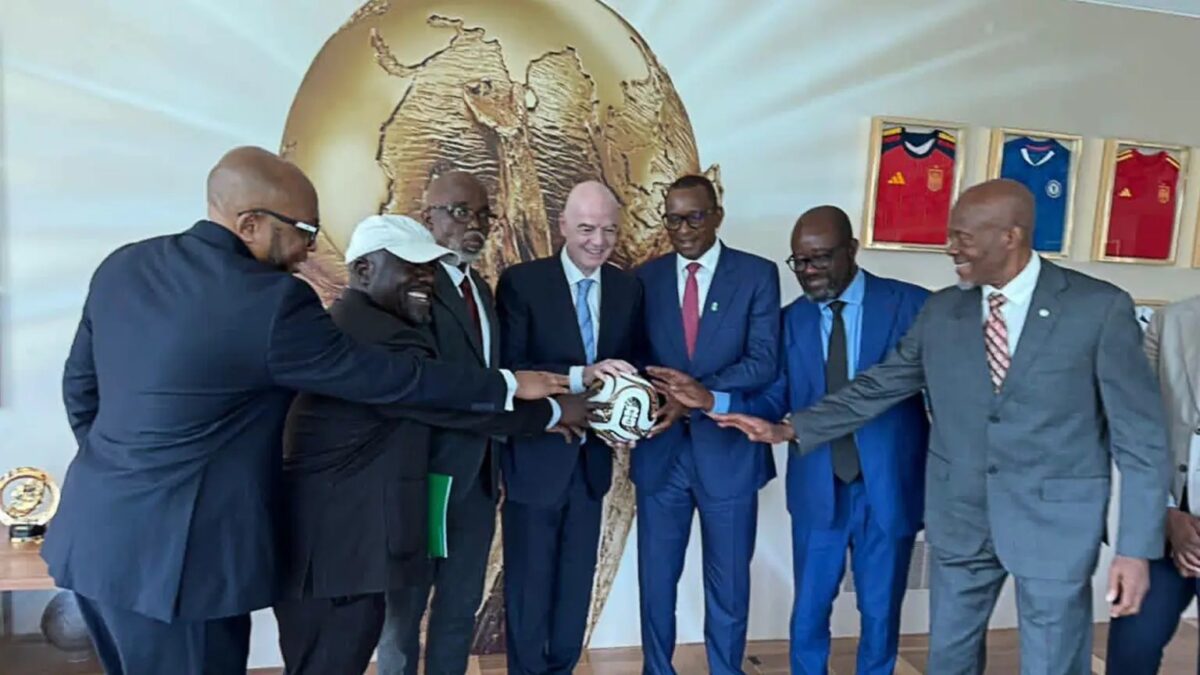
Nigeria’s football reform process has received a major boost after FIFA expressed support for ongoing efforts aimed at restructuring and strengthening the administration of the game in the country.
The development comes amid growing calls for sweeping changes following a series of disappointing results by Nigeria’s national teams and increasing demands from stakeholders for greater transparency, accountability and efficiency within football administration.
Discussions have also intensified around the possibility of establishing a normalisation committee to oversee a transition process and help chart a new direction for Nigerian football.
FIFA Engages Nigerian Football Stakeholders
FIFA representatives have reportedly been in discussions with Nigerian football authorities and government officials as efforts continue to reshape the administration of the sport.
The world football governing body is understood to be monitoring developments closely while offering guidance on how reforms can be implemented in a manner that aligns with international football regulations.
The engagement is viewed as a positive sign for stakeholders seeking lasting solutions to challenges that have affected Nigerian football over the years.
Reform Momentum Continues To Grow
Calls for reform have grown louder in recent months following setbacks suffered by several Nigerian national teams.
The Super Eagles’ struggles on the international stage, alongside disappointing outcomes involving other national teams, have triggered widespread debate about the structure and management of football in the country.
Many football administrators, former players and analysts believe the current moment presents an opportunity to address long-standing issues and establish a more sustainable system capable of delivering long-term success.
Recent developments have also led to increased scrutiny of governance practices, financial management and the overall direction of Nigerian football.
Normalisation Committee Discussions Gather Pace
One of the major issues being discussed is the possibility of appointing a normalisation committee.
Such committees are typically established by FIFA in situations where football associations require administrative restructuring, conflict resolution or transitional oversight.
Supporters of the idea argue that an independent body could help rebuild confidence in the administration of Nigerian football and create a foundation for future reforms.
Others believe any changes must be carefully managed to ensure stability while protecting Nigeria’s standing within international football.
Opportunity To Rebuild
Many stakeholders see the current situation as a rare opportunity to reset Nigerian football.
The country remains one of Africa’s biggest football nations, with a rich history that includes Africa Cup of Nations triumphs, Olympic success and strong performances at youth level.
However, there is widespread agreement that Nigeria must strengthen its football institutions if it hopes to consistently compete with the world’s leading football nations.
Improved governance, stronger grassroots structures, better funding mechanisms and increased accountability have all been identified as key areas requiring attention.
Focus On Long-Term Development
Beyond immediate administrative changes, football stakeholders are urging authorities to focus on sustainable development.
Investment in youth football, coaching education, scouting networks and domestic competitions is widely seen as essential for future success.
Many experts believe that reforms should not simply focus on leadership changes but should also create systems capable of producing lasting improvements regardless of who occupies key positions.
The goal is to establish a football framework that supports player development, enhances competitiveness and restores confidence among supporters.
Critical Period For Nigerian Football
The coming months are expected to be crucial as discussions continue and stakeholders work towards a consensus on the future of the sport.
FIFA’s backing provides encouragement for those pushing for change, but the success of any reform programme will ultimately depend on implementation.
For Nigerian football fans, the hope is that the current process will mark the beginning of a new era built on transparency, professionalism and sustainable growth.
With FIFA, local stakeholders and football authorities all involved in the conversation, attention will now turn to the decisions that could shape the future of Nigerian football for years to come.