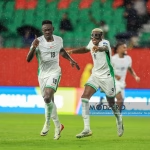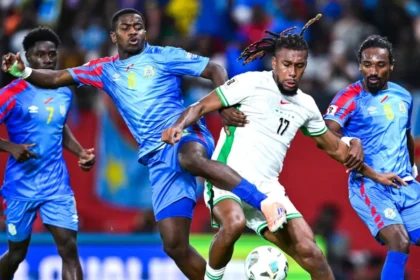
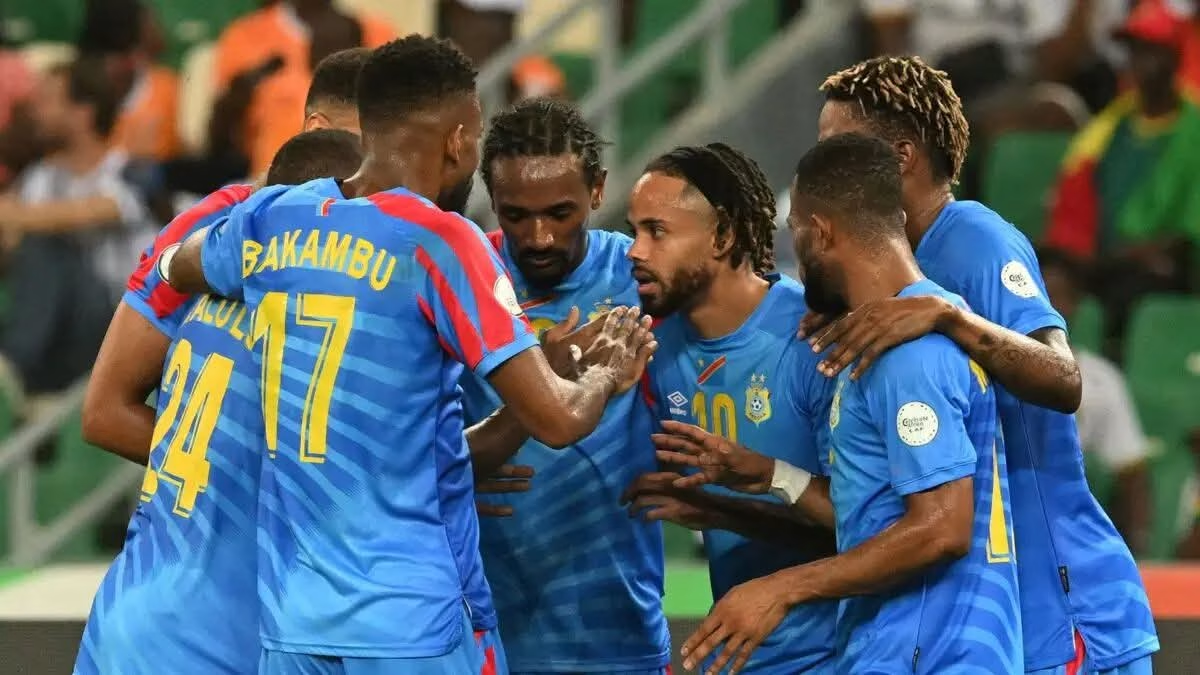
Chancel Mbemba’s dramatic stoppage-time winner sent DR Congo into Sunday’s 2026 World Cup playoff final with a stunning 1-0 victory over Cameroon at the Al-Barid Stadium in Rabat, Morocco, setting up a tantalizing showdown with Nigeria for a spot in the intercontinental playoff.
The Marseille center-back rose highest at the far post deep into added time to smash home the decisive goal, breaking Cameroonian hearts and ending the Indomitable Lions’ World Cup dreams in the cruelest fashion. The Leopards will now face the Super Eagles on Sunday, with the winner advancing to March’s intercontinental playoff for a place at the 2026 World Cup.
Defensive Masterclass Frustrates Cameroon
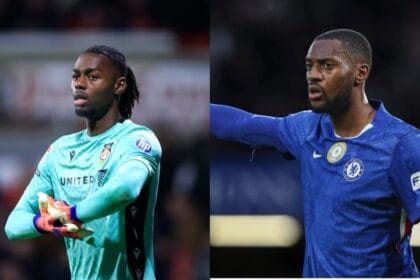
DR Congo’s triumph was built on defensive solidity, with Sebastien Desabre’s side maintaining the stinginess that saw them concede just four goals in ten qualifying matches. The backline marshaled by Mbemba alongside Axel Tuanzebe, Aaron Wan-Bissaka, and Arthur Masuaku stood firm against wave after wave of Cameroonian attacks.
Cameroon controlled 65% of possession but struggled to translate that dominance into clear-cut chances. Goalkeeper Lionel Mpasi was rarely troubled, with the Indomitable Lions unable to break down DR Congo’s well-organized defensive block.
Bryan Mbeumo was Cameroon’s brightest attacking threat, forcing Mpasi into a smart save in the first half. Vincent Aboubakar was introduced in the second half seeking inspiration, but the captain couldn’t find the breakthrough as DR Congo’s defense threw bodies on the line repeatedly.
The match appeared destined for extra time as the clock ticked past 90 minutes with the scoreline still goalless. Cameroon had penalty appeals waved away, adding to their growing frustration as opportunities continued to evade them.
Mbemba’s Moment of Magic
Just when it seemed DR Congo would settle for extra time, Mbemba provided the decisive moment. A late corner kick swung into the penalty area caused chaos among Cameroon’s defenders, with the ball evading everyone before finding the unmarked Mbemba at the back post.
The 30-year-old defender showed striker’s instincts, meeting the ball cleanly and smashing it past André Onana from close range. Cameroon had no time to respond, with the final whistle confirming the Indomitable Lions’ elimination and sparking wild celebrations among the Congolese contingent.
Standout Performers
Chancel Mbemba was the hero, scoring the winning goal while delivering an imperious defensive performance. The Marseille man won aerial duels, made crucial blocks, and organized his defensive line expertly throughout the 90 minutes.
Aaron Wan-Bissaka shut down Cameroon’s left flank effectively, with his one-on-one defending outstanding. The former Manchester United right-back timed his tackles perfectly and provided crucial cover when teammates were caught out of position.
Lionel Mpasi made several important saves when called upon, while his command of the penalty area gave DR Congo’s defense confidence. The Standard Liège goalkeeper’s distribution also helped initiate counter-attacks that occasionally troubled Cameroon.
Bryan Mbeumo was excellent despite ending up on the losing side. The Brentford forward’s movement, dribbling, and creativity created problems throughout, with his work rate deserving better than elimination.
What This Means for Nigeria
The Super Eagles will now prepare to face a DR Congo side brimming with confidence after their dramatic late victory. Nigeria’s convincing 4-1 extra-time win over Gabon demonstrated their attacking prowess, but DR Congo presents an entirely different challenge.
Where Gabon wilted under Nigerian pressure, DR Congo has proven throughout qualifying that they can grind out results through defensive organization. The Leopards’ defensive solidity will test Nigeria’s patience, with Desabre likely to employ similar deep-sitting tactics as he did against Cameroon.
Nigeria possesses superior attacking firepower with Victor Osimhen in devastating form, supported by creative talents like Ademola Lookman, Samuel Chukwueze, and Chidera Ejuke. However, DR Congo’s ability to frustrate opponents could neutralize those threats if their tactical plan works effectively.
The head-to-head record slightly favors Nigeria, but recent meetings have been closely contested. Eric Chelle faces the challenge of breaking down a well-drilled defensive unit without playing into DR Congo’s counter-attacking strengths. Nigeria’s tendency to push high creates spaces that the Leopards could exploit, particularly if the Super Eagles become impatient.
The midfield battle will be crucial, with Wilfred Ndidi’s engine room needing to control possession while remaining disciplined. Set pieces could prove decisive, as evidenced by Mbemba’s winner, with both teams possessing aerial threats.
Historical Stakes
For DR Congo, Sunday’s final represents an opportunity to end a 51-year World Cup drought. The Leopards last appeared at the 1974 World Cup in West Germany when competing as Zaire. Victory over Nigeria would validate years of progress and provide the current generation with a chance to rewrite their nation’s World Cup narrative.
For Nigeria, the pressure is immense. The Super Eagles are expected to defeat DR Congo and progress as Africa’s representative. Missing consecutive World Cups would be unthinkable for Nigerian football, which views qualification as a bare minimum expectation.
Sunday’s winner advances to FIFA’s Intercontinental Playoff Tournament in March 2026 in Mexico, joining teams from Asia, South America, Oceania, and CONCACAF in a six-team competition for the final two World Cup berths. The African representative’s path depends on FIFA rankings, with higher rankings potentially providing seeding advantages.
Our Thoughts
DR Congo’s dramatic victory sets the stage for a captivating final in Rabat. The Leopards have proven themselves as stubborn opponents capable of frustrating talented attacking sides, while Nigeria brings star power and attacking flair that few African teams can match.
Sunday will determine which nation keeps their World Cup dreams alive. The stakes couldn’t be higher, and African football will witness one of its most important matches in recent memory. For DR Congo, it’s about ending decades of World Cup absence and For Nigeria, it’s about meeting national expectations and maintaining their status as one of Africa’s football powerhouses.