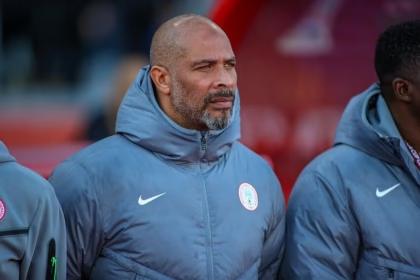
Sunday Oliseh has delivered a sobering assessment of Nigerian football after the Super Eagles failed to qualify for the 2026 FIFA World Cup, warning that the country’s standing in world football could suffer long-term damage if urgent reforms are not implemented.
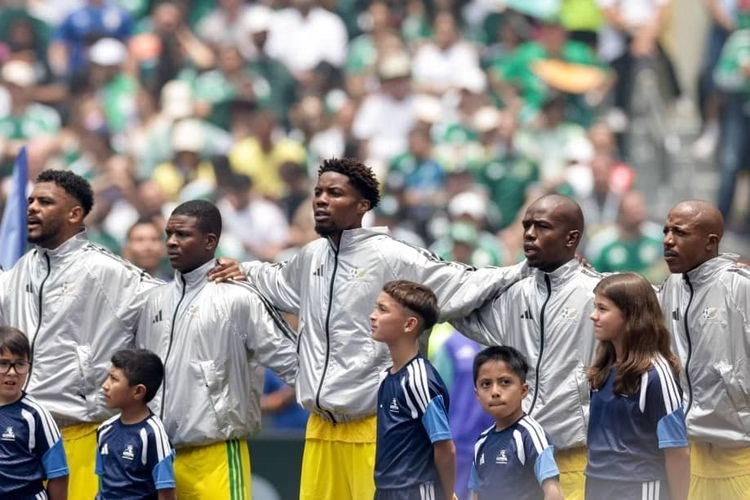
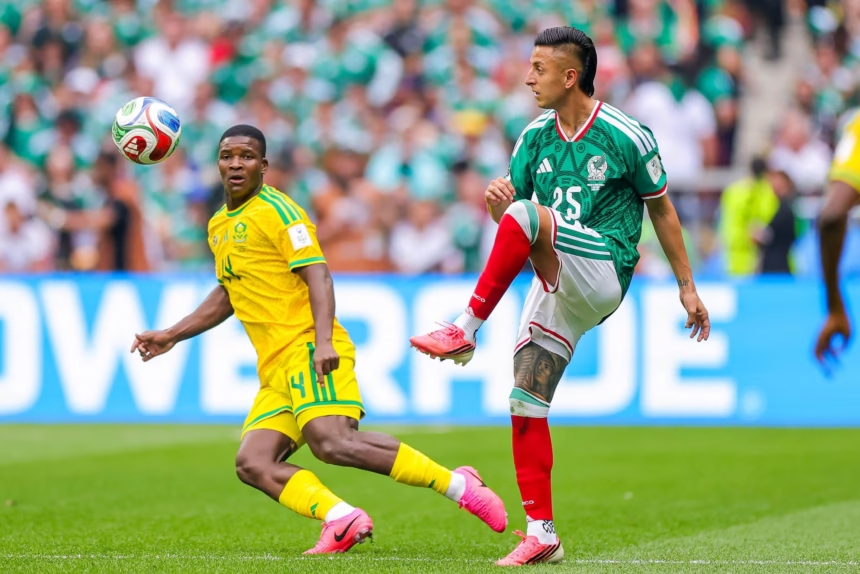
The former Super Eagles captain and coach spoke as the 2026 FIFA World Cup got underway in Mexico, with football fans across the globe celebrating the start of the first-ever 48-team tournament. Despite FIFA expanding the competition and increasing Africa’s representation, Nigeria still failed to secure a place among the nations competing on football’s biggest stage.
Nigeria’s absence has become one of the major talking points surrounding African football, particularly given the country’s rich World Cup history and reputation as one of the continent’s traditional powerhouses.
Oliseh believes the consequences could extend far beyond a single tournament.
According to the former midfielder, repeated failures to qualify for the World Cup could have a devastating impact on player development, sponsorship opportunities, and Nigeria’s global football relevance.
He warned that a prolonged absence from football’s biggest competition would reduce international visibility for Nigerian players and potentially weaken the country’s influence within the global game.
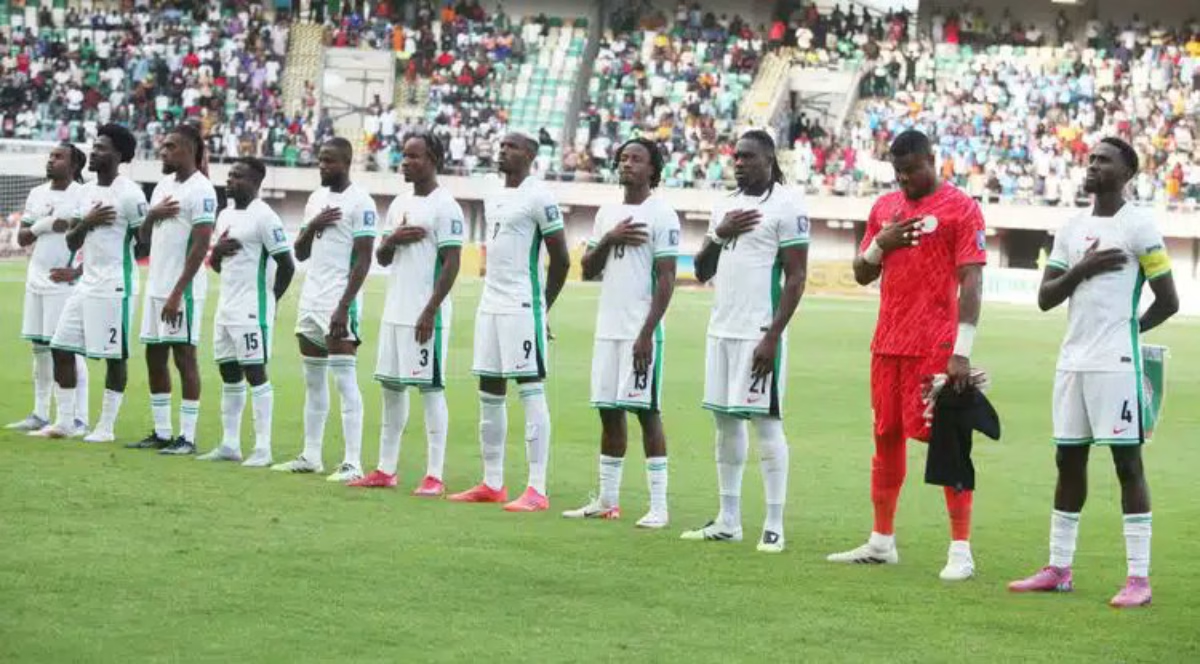
The Super Eagles’ qualification campaign was marked by instability, with multiple coaching changes during the journey. Nigeria eventually reached the African play-off stage but fell short of securing one of the continent’s World Cup tickets, leaving supporters frustrated and searching for answers.
The disappointment has been amplified by the fact that the 2026 edition features a record 48 nations, making it the largest World Cup in history. FIFA’s decision to expand the tournament created additional qualification opportunities across all confederations, including Africa.
For many observers, Nigeria’s failure to take advantage of those extra places has raised fresh concerns about the direction of the national team and the overall administration of football in the country.
Former Super Eagles stars and supporters have repeatedly called for structural reforms within Nigerian football, arguing that the country possesses enough talent to compete regularly at major international tournaments.
As the month-long World Cup spectacle unfolds across Mexico, the United States and Canada, millions of Nigerian fans will once again watch from afar, hoping lessons are learned from another painful qualification setback.
With attention now gradually shifting towards future international competitions and the next World Cup cycle, Oliseh’s warning is likely to reignite debate over what changes are needed to return the Super Eagles to football’s grandest stage.
For a nation that has produced some of Africa’s greatest footballers and previously appeared at six FIFA World Cups, the pressure to reverse the current trend has never been greater.