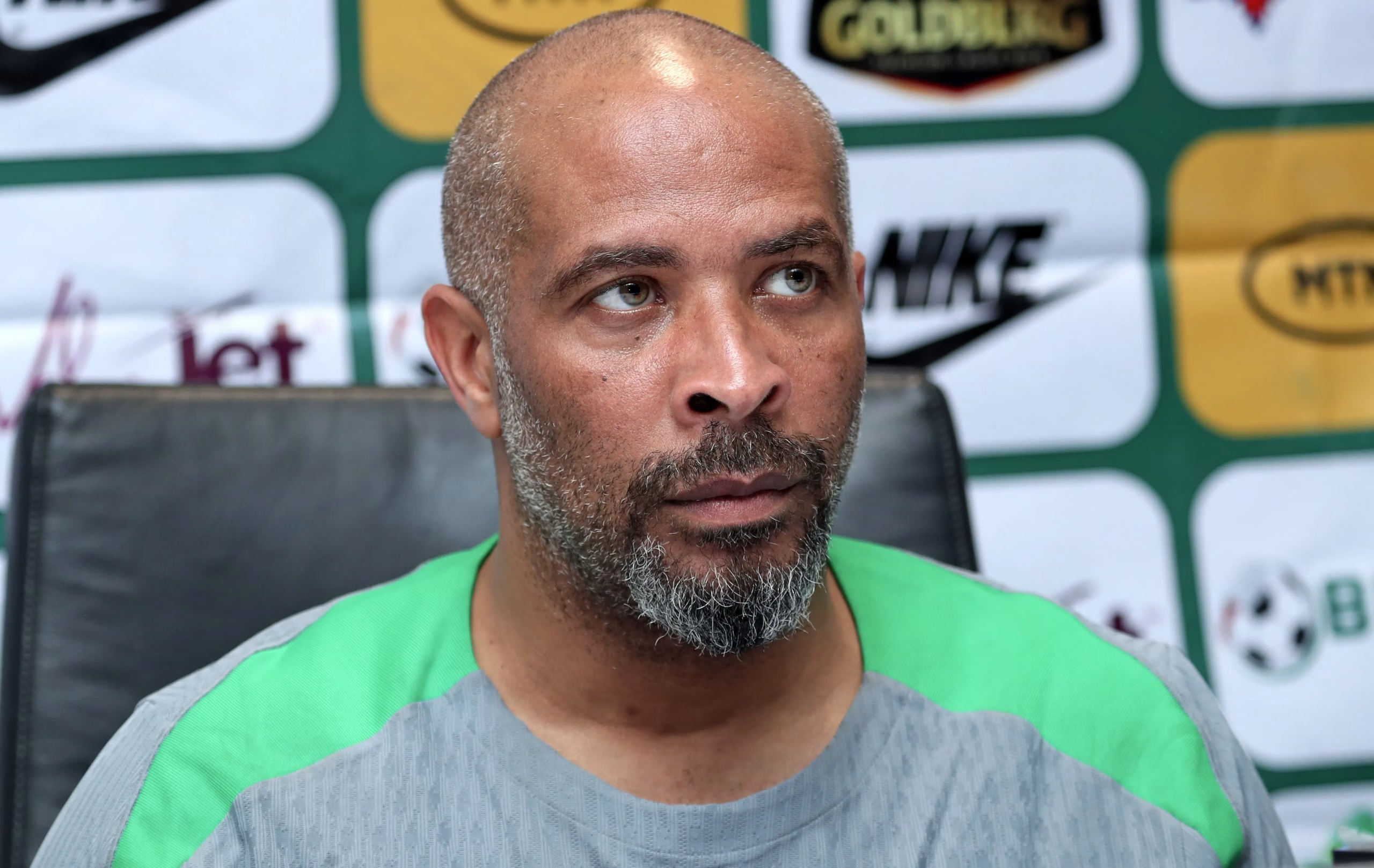
Super Eagles head coach Eric Chelle has sparked controversy by accusing DR Congo’s technical staff of using voodoo during the penalty shootout that eliminated Nigeria from the 2026 World Cup playoffs on Sunday night.
The Franco-Malian tactician made the explosive allegation after Nigeria crashed out 4-3 on penalties following a 1-1 draw at the Prince Moulay Abdellah Stadium in Rabat, Morocco. The defeat condemns the Super Eagles to miss consecutive World Cups for the first time in their history.
What Chelle Claimed
Speaking to journalists immediately after the match, Chelle explained why he was involved in a heated confrontation with DR Congo’s technical bench during the shootout. The incident had threatened to escalate into chaos before match officials and opposing coach Sebastien Desabre intervened to separate him from the Congolese staff member.
“During all the penalties, the guy from Congo did some voodoo every time, every time, every time,” Chelle told ESPN Africa while demonstrating the action by raising his arm. “So this is why I was a little nervous after him.”
When pressed to elaborate on what he witnessed, the 48-year-old coach added: “Yeah, something like, I don’t know if it’s water or something like that [he was spraying it up].”
Chelle also used the French term “maraboutage” when speaking to French-language media, a word associated with spiritual manipulation and black magic in West African culture. The coach insisted the actions of the DR Congo staff member unsettled him and contributed to his aggressive reaction during the shootout.
The Incident That Sparked the Confrontation
Television footage captured Chelle attempting to confront a member of DR Congo’s technical staff during the penalty shootout. At one point, he was seen picking up what appeared to be a water bottle, seemingly preparing to throw it toward the Congolese bench before being restrained by his own staff and match officials.
The confrontation reached its peak after DR Congo’s victory was confirmed. Chelle had to be physically held back as he squared up to members of the Leopards’ technical team, with Desabre himself stepping in to prevent the situation from escalating further.
The match commissioner is expected to include the incident in his official report to CAF, though no immediate sanctions have been announced. Video evidence of Chelle’s actions during the shootout will likely form part of any disciplinary review.
DR Congo’s Response
A DR Congo representative has firmly denied Chelle’s allegations, according to reports from The Athletic. When approached about the accusations, Desabre appeared dismissive and focused on his team’s historic achievement rather than engaging with the controversy.
The Leopards’ coaching staff has not issued a formal statement addressing Chelle’s claims. DR Congo officials are reportedly content to let their team’s performance on the pitch do the talking, having secured passage to the intercontinental playoff in March through their superior penalty-taking.
What Actually Happened
The facts of the match are straightforward. Nigeria took an early lead through Frank Onyeka’s third-minute deflected strike, but Meschak Elia equalized in the 32nd minute after Alex Iwobi’s costly error. The match remained 1-1 after 90 minutes and extra time, forcing a penalty shootout to determine who would advance.
DR Congo made a tactical substitution before the shootout, replacing goalkeeper Lionel Mpasi with Timothy Fayulu. The fresh shot-stopper proved decisive, saving penalties from Moses Simon and Semi Ajayi as the Leopards converted four of their five kicks.
Calvin Bassey, Moses Simon, and Semi Ajayi all missed for Nigeria, with Bassey’s effort saved, Simon’s stopped by Fayulu, and Ajayi’s crucial sudden-death penalty also denied by the substitute goalkeeper. Chancel Mbemba scored the winning penalty to spark wild celebrations among the Congolese delegation.
Nigerian Reaction
The accusations have divided opinion in Nigeria. Some fans have rallied behind Chelle, suggesting that spiritual practices are commonplace in African football and that DR Congo may have used such methods to gain an advantage. Others have criticized the coach for making excuses rather than accepting responsibility for Nigeria’s poor penalty-taking.
Social media erupted following Chelle’s comments, with many Nigerians expressing frustration that their coach would resort to such allegations rather than acknowledging tactical and technical shortcomings. The Super Eagles missed three penalties, a failure that cannot be blamed on alleged spiritual interference.
Former Nigeria international John Ogu was among those questioning Chelle’s post-match approach, arguing that the coach should focus on why his players failed to convert from the spot rather than making unverifiable claims about the opposition’s conduct.
The Broader Context
Chelle’s allegations come amid intense scrutiny of his management of the Super Eagles. Nigeria entered the playoff as favorites but struggled to create chances after Victor Osimhen’s injury forced his substitution at halftime. The team appeared devoid of attacking ideas without their talisman, raising questions about tactical preparation and squad depth.
The penalty shootout itself was Nigeria’s undoing. The absence of regular penalty taker William Troost-Ekong from the starting lineup meant the Super Eagles had to rely on others to step up in crucial moments. When those players faltered, Nigeria’s World Cup dream died.
Whether Chelle genuinely believes DR Congo used spiritual methods or was simply frustrated by a devastating defeat remains unclear. What is certain is that his comments have created unnecessary controversy and shifted focus away from Nigeria’s on-field failures.
Historical Precedent
This is not the first time voodoo or juju has been alleged in African football. Such practices are deeply rooted in some West and Central African cultures, and accusations of spiritual manipulation occasionally surface in high-stakes matches across the continent.
However, these claims are typically impossible to prove or disprove, making them problematic when raised by coaches or officials. CAF and FIFA generally avoid addressing spiritual or religious matters, focusing instead on tangible violations of football regulations.
Chelle’s decision to make such allegations publicly risks damaging his reputation and Nigeria’s standing within African football. Opponents may view the comments as poor sportsmanship, while neutrals could question whether the coach is deflecting blame for his team’s failure.
What Happens Next
CAF is expected to review match officials’ reports from the playoff final, including any mention of the touchline confrontation between Chelle and DR Congo’s staff. If the match commissioner’s report highlights Chelle’s aggressive behavior, the Super Eagles coach could face disciplinary action ranging from a fine to a touchline ban.
For Nigeria, the focus must shift to rebuilding and preparing for future qualifying campaigns. Missing consecutive World Cups represents a crisis for Nigerian football, and Chelle’s position will come under intense scrutiny in the coming weeks and months.
The Nigeria Football Federation will need to decide whether the Franco-Malian coach is the right person to lead the team forward or if a change is necessary. Chelle steadied the ship during qualifying after inheriting a difficult situation, but his inability to guide Nigeria to the World Cup and his controversial post-match comments raise serious questions about his future.
DR Congo, meanwhile, can celebrate their progression to the intercontinental playoff in March. The Leopards will face teams from other confederations for one of the final two World Cup berths, with their 51-year wait to return to football’s biggest stage potentially ending in Mexico next year.
Final Analysis
Chelle’s voodoo allegations, regardless of their veracity, represent an unfortunate coda to Nigeria’s World Cup elimination. Whether he genuinely believes what he claimed or was simply overcome by emotion and frustration, the comments have created a distraction from the real issues that need addressing.
Nigeria lost because they missed three penalties, struggled to create chances after Osimhen’s injury, and lacked the mental strength to prevail in a high-pressure shootout. These are tactical, technical, and psychological failures that no amount of alleged spiritual interference can explain away.
For Nigerian football, this episode serves as a painful reminder that excuses won’t qualify teams for World Cups. Only improving on the pitch, making better tactical decisions, and developing greater mental resilience will ensure the Super Eagles return to football’s grandest stage. Until then, controversial allegations and finger-pointing will continue to replace the success and glory Nigerian fans desperately crave.