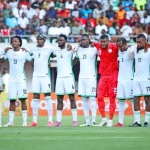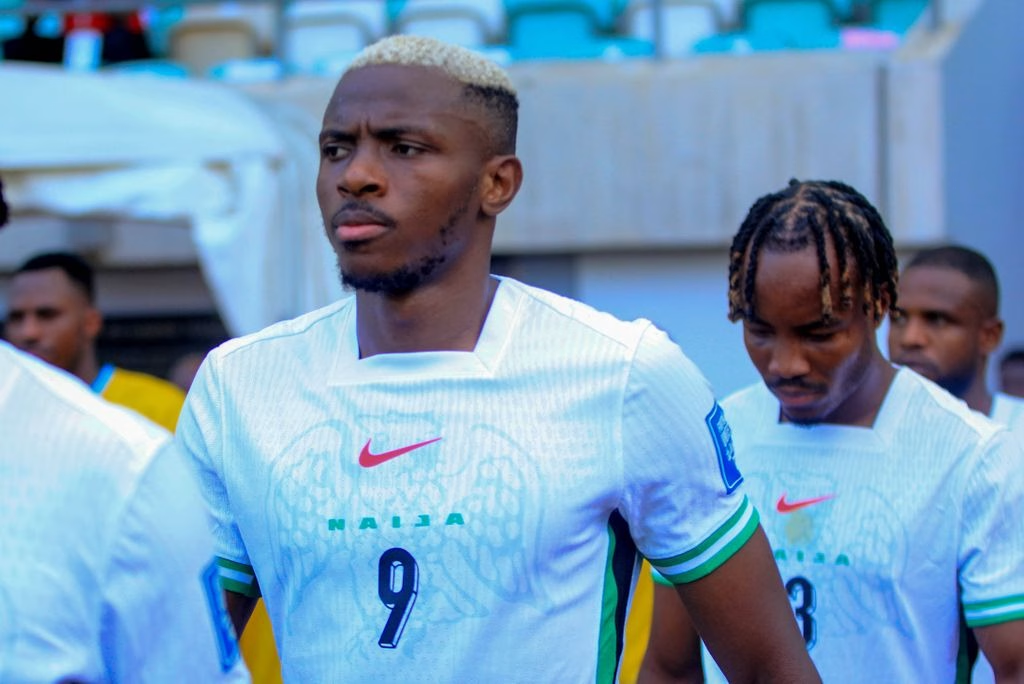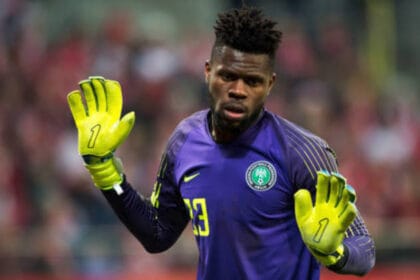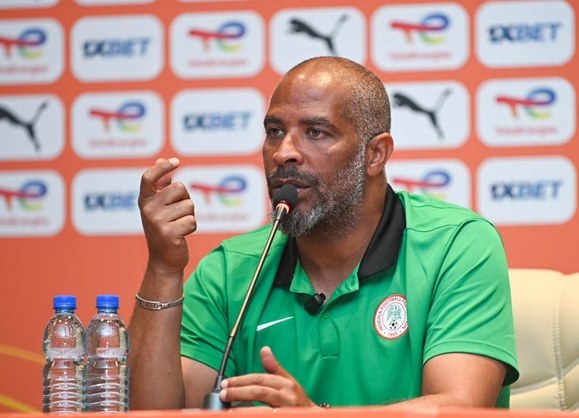
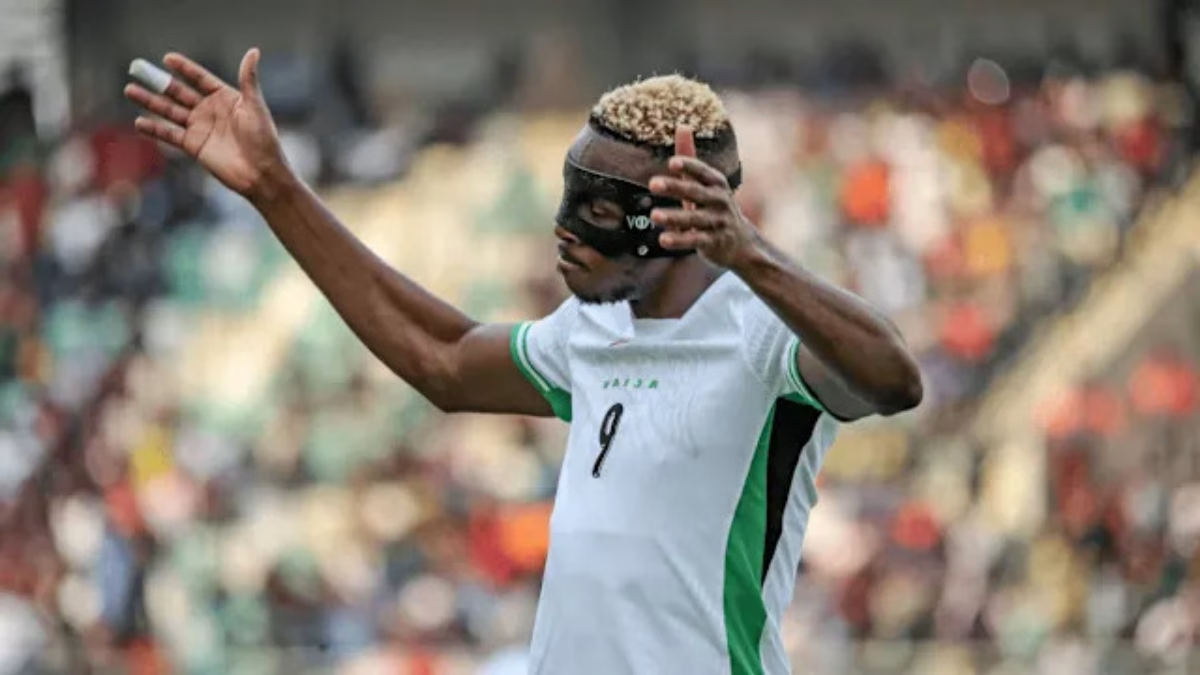
The sight of Victor Osimhen trudging off the pitch in the 46th minute of Nigeria’s World Cup playoff final against DR Congo told its own story. The Galatasaray striker, who had been the Super Eagles’ talisman throughout the qualifying campaign, suffered an injury that forced Eric Chelle into an early substitution that would ultimately prove costly.
Akor Adams replaced Osimhen as Nigeria’s World Cup hopes hung in the balance, but the change stripped the Super Eagles of their attacking focal point. What followed was 74 minutes of toothless football that culminated in a devastating penalty shootout defeat, ending Nigeria’s dream of reaching the 2026 World Cup.
The Injury That Changed Everything
Osimhen’s injury occurred early in the second half at the Prince Moulay Abdellah Stadium in Rabat. The exact nature of the knock remains unclear, but it was serious enough for Chelle to make an immediate change rather than risk further damage to his star player.
The timing couldn’t have been worse. Nigeria were locked at 1-1 after Frank Onyeka’s early opener had been canceled out by Meschak Elia’s equalizer. The match was finely poised, and both teams knew the next goal could prove decisive in securing passage to the intercontinental playoff in March.
Osimhen had been heavily marked throughout the first half by DR Congo’s physical defensive pairing of Chancel Mbemba and Axel Tuanzebe. The rough treatment may have contributed to the injury, though no specific incident stood out as the moment when the damage occurred.
What was clear to everyone watching was that Nigeria’s entire attacking threat walked off with Osimhen. The 26-year-old had been the Super Eagles’ driving force throughout the playoff campaign, scoring twice in extra time against Gabon to drag his team into the final. Without him, Nigeria looked rudderless.
Adams Struggles to Fill the Void
Chelle turned to Adams as Osimhen’s replacement, a decision that Nigerian fans and pundits can agree with due to his recent form for the Super Eagles. The Sevilla striker had scored the opening goal against Gabon but lacked Osimhen’s physical presence, movement, and goal threat that makes defenses uncomfortable.
Adams nearly made an immediate impact, coming close to scoring just two minutes after his introduction. However, Congolese defenders scrambled the ball to safety, and it proved to be his only meaningful contribution. Seven minutes later, he almost scored an own goal from an Arthur Masuaku set piece, only for Stanley Nwabali to produce a vital save.
The substitution fundamentally altered Nigeria’s attacking approach. Where Osimhen’s movement creates spaces for teammates and his physical strength allows him to hold up play, Adams offered little of either. Samuel Chukwueze, Ademola Lookman, and Alex Iwobi suddenly found themselves isolated, unable to connect their build-up play with the final third.
Nigeria’s Attacking Impotence
The statistics tell a damning story. From the moment Osimhen left the field, Nigeria created virtually nothing. DR Congo grew in confidence, enjoying better possession and creating several threatening moments while Nigeria’s attacking play became increasingly desperate and disjointed.
One fan captured the mood perfectly on social media after the penalty shootout defeat. The team’s spirit, they argued, dropped from 100 to 30 the moment Osimhen was substituted. Nigeria had been very much an Osimhen team throughout the qualifying campaign, and without him, they looked ordinary.
The Super Eagles had one penalty appeal waved away when Lookman was brought down by Noah Sadiki in the 59th minute, but clear-cut chances remained elusive. Nigeria’s attacking players seemed unsure of how to break down DR Congo’s disciplined defensive block without Osimhen’s presence to occupy defenders.
In extra time, the situation worsened. DR Congo looked the more threatening side, with Noah Sadiki and Fiston Mayele both having goals controversially ruled out. Nigeria barely registered an attacking threat, their play lacking the urgency and quality needed in such a high-stakes encounter.
Tactical Questions for Chelle
The Osimhen substitution raises broader questions about Chelle’s tactical management. Why wasn’t there a clear plan for Nigeria to function without their star striker? And why did the entire team’s performance collapse so dramatically after one substitution?
These are uncomfortable questions that demand answers. Great teams find ways to cope when key players are unavailable. Nigeria’s complete dependence on Osimhen suggests a lack of tactical flexibility and depth that Chelle must address.
The coach’s in-game management also deserves scrutiny. Beyond the initial substitution, Chelle made changes that failed to alter Nigeria’s attacking impotence. Moses Simon and Chidera Ejuke, who had been influential off the bench against Gabon, were introduced but couldn’t replicate that impact.
Some observers wondered whether Osimhen’s injury was serious enough to warrant immediate substitution or if he could have continued with treatment. Given what unfolded after his departure, the question becomes whether Nigeria would have been better served keeping their talisman on the pitch at reduced capacity rather than replacing him entirely.
The Osimhen Factor
The substitution starkly illustrated just how dependent Nigeria had become on Osimhen. Throughout the qualifying campaign, the Super Eagles’ results and performances were directly tied not just to his form but his mere presence on the pitch.
Against Gabon, Osimhen scored twice in extra time after missing chances throughout regulation. His ability to produce moments of magic when they matter most is what separates elite strikers from good ones. Against DR Congo, Nigeria desperately needed someone to produce such a moment, but without Osimhen, no one stepped up.
This over-reliance on one player, however talented, represents a fundamental weakness in Nigeria’s approach. World Cup-bound teams need multiple goal threats and the tactical flexibility to adapt when key players are unavailable. Nigeria demonstrated neither against DR Congo.
The Galatasaray striker’s club form had been sensational heading into the playoff final. He’d scored six goals in his last three matches for the Turkish giants, including a Champions League hat-trick. That confidence and sharpness were exactly what Nigeria needed, and losing it so early proved catastrophic.
Lessons for the Future
Nigeria’s elimination offers harsh lessons for the future. Building a team so dependent on one player, regardless of his quality, creates vulnerability that opponents can exploit. DR Congo’s physical approach to containing Osimhen in the first half, which may have contributed to his injury, could become a blueprint for future opponents.
The Super Eagles must develop attacking patterns and goal threats that don’t rely solely on Osimhen’s brilliance. Players like Lookman, Chukwueze, and Simon possess quality but need to shoulder more responsibility in crucial moments. Against DR Congo, none could fill the void left by Osimhen’s departure.
Squad depth is another concern. If Adams isn’t the right profile to replace Osimhen, then who else can Nigeria call on? Arokodare who had a worst performance than Akor Adams himself? These selection decisions matter in knockout football where one substitution can determine a nation’s World Cup fate.
For Osimhen himself, the injury adds another painful chapter to Nigeria’s World Cup heartbreak. The striker dreams of playing on football’s biggest stage, but he’ll now have to wait at least another four years for that opportunity. Missing the 2026 World Cup, particularly after coming so close, will hurt deeply.
The Aftermath
Nigeria’s penalty shootout defeat sent shockwaves through African football. The three-time African champions will miss consecutive World Cups for the first time in their history, a statistic that seemed unthinkable when Onyeka gave them an early lead on Sunday night.
Osimhen’s injury and subsequent substitution will be remembered as the turning point. In knockout football, moments matter, and losing your best player when the match hangs in the balance can prove fatal. For Nigeria, it did exactly that.
As the dust settles on this painful elimination, questions about Osimhen’s injury, the decision to substitute him, and Nigeria’s over-dependence on their star striker will dominate discussions. The answers will shape how the Super Eagles approach future campaigns and whether they can develop the tactical flexibility and squad depth needed to compete at the highest level.
For now, though, there’s only heartbreak and the nagging question of what might have been had Osimhen stayed on the pitch.