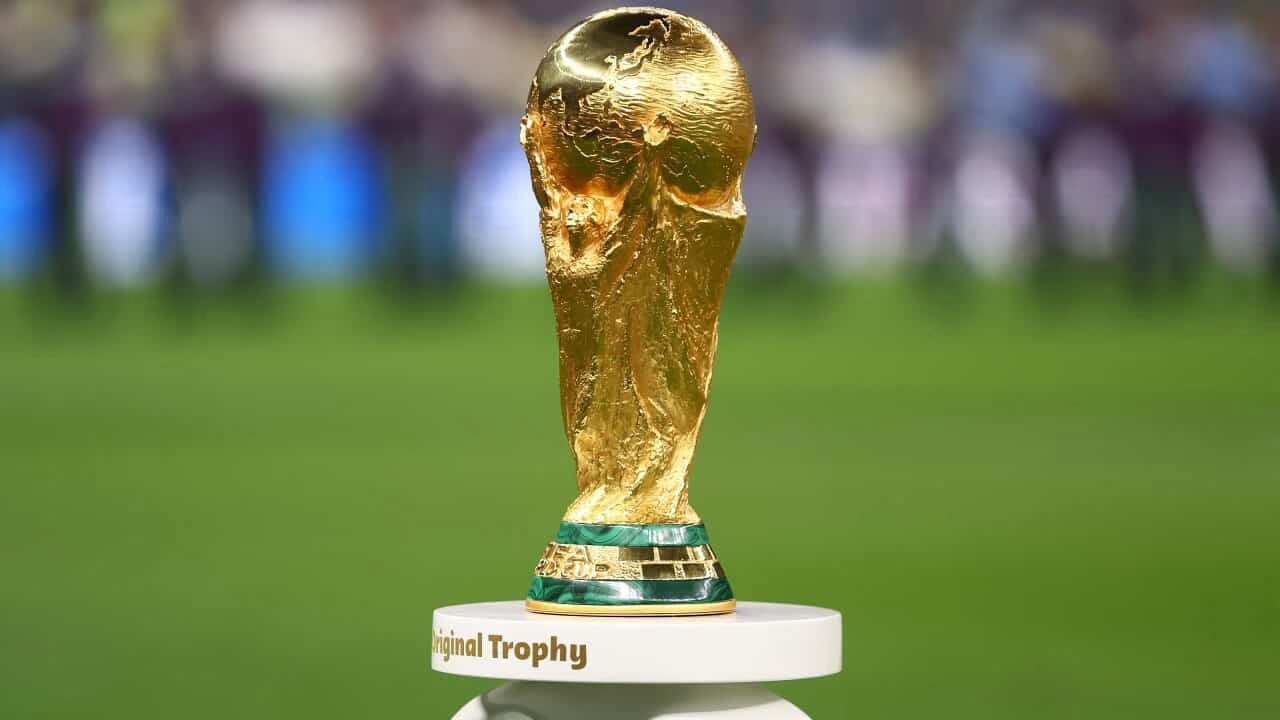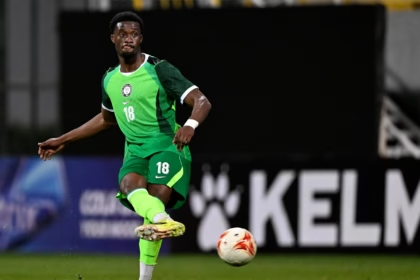
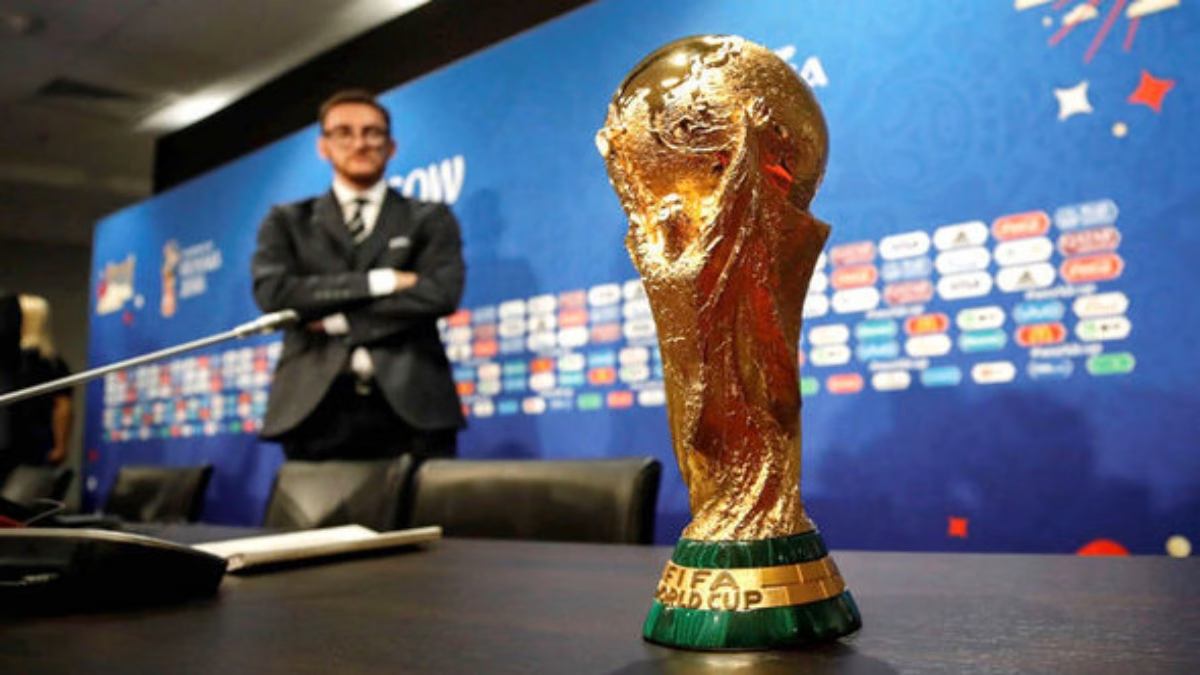
The Super Eagles could feature in a parallel international competition next summer after Russia proposed hosting a tournament exclusively for nations that failed to qualify for the 2026 FIFA World Cup.
The Russian Football Union (RFU) is reportedly developing plans for the unprecedented event, which would run simultaneously with the World Cup in the United States, Canada, and Mexico. Nigeria has been named among the potential participants following their heartbreaking penalty shootout defeat to DR Congo in the African playoff final.
What We Know So Far
According to multiple international reports, the RFU has begun shaping the concept of what some are calling “the World Cup for the non-qualified.” The tournament would be staged in Russia using four stadiums from the 2018 World Cup and feature between eight to twelve national teams.
Countries being considered include Russia, Serbia, Greece, Italy, Chile, Peru, Venezuela, Nigeria, Cameroon, and China. These nations share one thing in common: despite their footballing pedigree, none secured a place at the expanded 48-team World Cup.
The proposed event would be the first of its kind, bringing together historically strong teams with World Cup experience, emerging nations seeking exposure, and countries eager to maintain competitive momentum during the June-July window when they would otherwise be inactive.
Russia’s Motives
The initiative is widely seen as Russia’s attempt to regain international visibility after being barred from FIFA and UEFA competitions since February 2022 following the invasion of Ukraine. The country has not participated in World Cup qualifiers or European Championship tournaments since the sanctions were imposed.
According to 365Scores, the initiative aims to draw attention to the situation with FIFA sanctions and achieve their subsequent removal. If successful, Russia hopes to return to the qualification cycle for the 2030 World Cup.
RFU president Alexander Dyukov and former FIFA vice president Vyacheslav Koloskov are reportedly working on the proposal as a gesture of “global reintegration.” Their ultimate goal is to present their case at the FIFA Congress prior to the 2026 World Cup, pushing for the total lifting of bans on Russian national teams and clubs.
What It Could Mean for Nigeria
For the Super Eagles, this tournament presents a potential silver lining after their devastating World Cup elimination. Nigeria will miss consecutive World Cups for the first time in their history, leaving the team without competitive football during the summer of 2026.
The Nigeria Football Federation already has existing relations with Russia, having played an international friendly against them on June 6, which ended in a 1-1 draw. This connection could make Nigeria’s participation more likely if the tournament materializes.
A summer competition featuring strong national teams would provide Eric Chelle’s squad with meaningful matches and an opportunity to rebuild confidence after the playoff heartbreak. Players would gain competitive experience rather than sitting idle while the rest of the football world focuses on North America.
However, the decision to participate would carry significant political implications. Joining a Russian-hosted event that runs parallel to the official World Cup could be seen as undermining FIFA’s authority and the sanctions imposed on Russia.
Major Obstacles Remain
Despite the widespread discussion, the project remains speculative and faces considerable challenges.
The RFU has not issued a formal announcement or confirmed full details of the proposal. Without official backing from Russian authorities, the tournament remains more concept than reality.
Legitimacy presents another concern. Any matches would fall outside FIFA’s jurisdiction, raising questions about player availability and federation involvement. National football associations may be reluctant to sanction their teams’ participation in an unofficial competition.
Scheduling conflicts pose practical problems. June and July 2026 will be dominated by the actual World Cup, meaning broadcasters, sponsors, and clubs will prioritize the official tournament. European clubs, in particular, may refuse to release players for an unsanctioned event.
Political sensitivity could deter nations from participating. Countries may hesitate to join an event that could be perceived as supporting Russia’s attempts to circumvent international sporting sanctions.
The Bigger Picture
The proposal however — Show Russia’s determination to remain part of international football despite its isolation. Whether this “alternative World Cup” happens or remains merely a talking point, the discussion reflects broader tensions in global football governance.
For Nigeria, the situation underscores the consequences of failing to qualify for the World Cup. The Super Eagles now find themselves considering participation in an unofficial tournament hosted by a sanctioned nation, a scenario that would have seemed unthinkable had they converted their penalties against DR Congo.
Sports analysts suggest a more modest version of the tournament, with fewer teams and a shorter format, is more realistic than a full-scale competitive event. A friendly international cup rather than a parallel championship may be the eventual outcome.
Nigeria’s Decision
The NFF has not publicly commented on whether Nigeria would consider participating in such a tournament. The federation faces a difficult balancing act between providing competitive football for the national team and navigating the political complexities of joining a Russian-hosted event.
What is certain is that Nigeria’s World Cup absence has created a void that needs filling. Whether Russia’s proposed tournament offers a legitimate opportunity or remains a politically charged pipe dream will become clearer in the coming months.
For now, Nigerian football fans can only watch and wait as this unusual proposal develops. The Super Eagles’ summer of 2026 remains uncertain, but one thing is clear: missing the World Cup has consequences that extend far beyond simply watching from home.