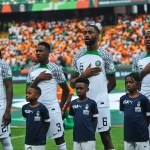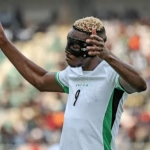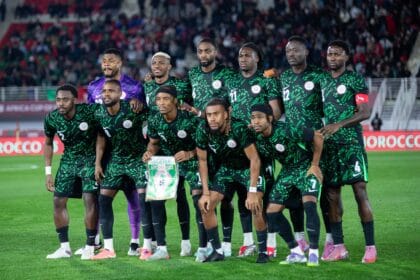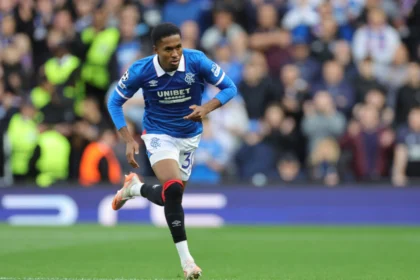
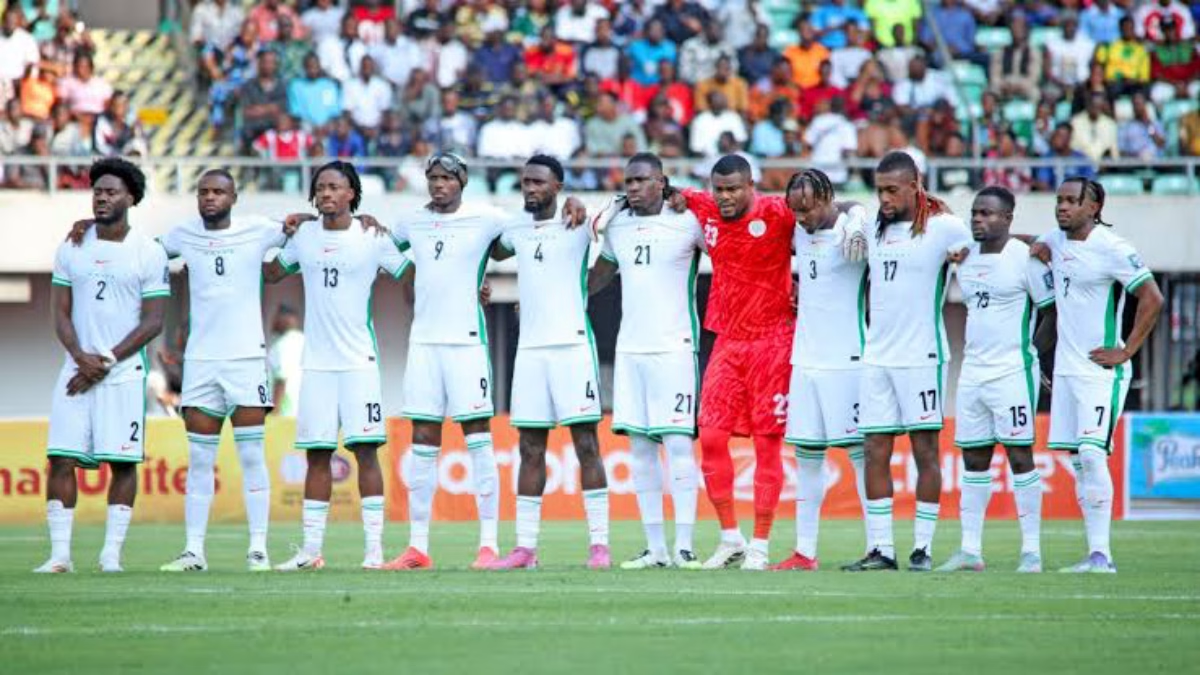
Nigeria’s World Cup hopes died in the cruellest fashion imaginable on Sunday night as DR Congo won a tense penalty shootout following a 1-1 draw after extra time at the Prince Moulay Abdellah Stadium in Rabat, Morocco.
The Leopards held their nerve from the spot to seal Africa’s ticket to the intercontinental playoff in March 2026, condemning the Super Eagles to miss consecutive World Cups for the first time in their history. What began with promise and early dominance ended in devastation and despair for Eric Chelle’s side.
Frank Onyeka’s third-minute deflected strike had given Nigeria the perfect start, but Meschak Elia’s equalizer following Alex Iwobi’s costly error ensured a nerve-shredding finish. After 120 goalless minutes of largely frustrating football, it came down to penalties, and Nigeria faltered when it mattered most.
Dream Start Turns Sour
The Super Eagles couldn’t have scripted a better opening. Just three minutes in, Onyeka let fly from the edge of the area, his shot taking a wicked deflection off a DR Congo defender that left goalkeeper Lionel Mpasi helpless. The early goal should have settled Nigerian nerves, but instead it merely served as false hope.
Nigeria controlled possession in the opening half-hour, with Victor Osimhen, Samuel Chukwueze, and Ademola Lookman looking dangerous in attack. Yet DR Congo refused to panic. Sebastien Desabre’s game plan was clear: sit deep, stay compact, frustrate Nigeria’s rhythm, and wait for opportunities on the break.
That opportunity arrived in the 32nd minute, gift-wrapped by Iwobi. The Fulham midfielder gave away possession under minimal pressure deep in Nigerian territory, and DR Congo pounced. The counter-attack was swift and clinical, with the ball whipped into the box where Wilfred Ndidi’s attempted clearance only diverted it into Elia’s path. The forward made no mistake from close range, and suddenly it was game on.
The equalizer knocked the wind from Nigeria’s sails. What had been confident possession play became anxious probing, and the Super Eagles went into halftime level despite their territorial dominance.
Frustration Builds
Nigeria struggled to regain their early momentum after the break. DR Congo grew bolder, enjoying better possession and creating dangerous moments while being caught offside repeatedly in their eagerness to grab a winner.
Lookman couldn’t impose himself despite several opportunities, while Osimhen found himself suffocated by Chancel Mbemba and Axel Tuanzebe’s physical marking. Chelle’s decision to substitute his star striker and introduce Akor Adams raised eyebrows, but with extra time looming, the coach was clearly thinking about fresh legs.
The Super Eagles had penalty appeals waved away when contact in the box went unpunished, adding to their mounting frustration. DR Congo’s defensive discipline remained water-tight, with every Nigerian attack met by a wall of blue shirts.
Extra Time Agony
The additional 30 minutes belonged to DR Congo. The Leopards asked more questions of Nigeria’s defense than the Super Eagles managed at the other end, and they should have won it in regulation.
Noah Sadiki thought he’d scored the winner when he bundled the ball over the line, only for the referee to judge he’d fouled Bruno Onyemaechi. Minutes later, Fiston Mayele had another effort ruled out for a push on the goalkeeper, leaving DR Congo furious but Nigeria grateful.
Nigeria created little of note in extra time, their attacking play devoid of the cutting edge that had overwhelmed Gabon four days earlier. Benjamin Frederick struggled with cramp as fatigue gripped both sides, and in the dying moments, Stanley Nwabali tipped Mbemba’s header around the post in what proved the final chance before penalties.
DR Congo made a tactical substitution before the shootout, bringing on goalkeeper Timothy Fayulu to replace Mpasi. It was a psychological masterstroke that would prove decisive.
Shootout Horror
Nigeria won the coin toss and elected to go first. It proved the wrong decision. Without regular penalty taker William Troost-Ekong on the pitch, the Super Eagles lacked composure from the spot.
As each kick was taken, the pressure mounted. DR Congo kept their nerve, converting with calm assurance while Nigeria faltered. When the decisive penalty was missed, Congolese players and supporters erupted in wild celebration. Nigeria’s players sank to their knees, devastated.
The statistics tell a damning story. Nigeria controlled possession for long periods but created precious few clear chances. DR Congo’s defensive organization frustrated every Nigerian attack, and when it came to penalties, mental strength proved more important than technical ability.
Onyeka’s early goal and tireless midfield work deserved better. Mbemba was immense for DR Congo, leading their defensive resistance and nearly winning it in extra time. Elia’s equalizer kept the Leopards alive when Nigeria threatened to pull away, while Nwabali made crucial saves but couldn’t prevent the shootout heartbreak.
Reckoning Time
This defeat represents a disaster for Nigerian football. Missing consecutive World Cups for the first time since 1994 is unthinkable for a nation that views qualification as the bare minimum. The talent was there, the ranking favored Nigeria, yet when the pressure reached its peak, the Super Eagles crumbled.
Chelle’s future will face intense scrutiny. Despite steadying the ship during a turbulent qualifying campaign, his inability to deliver World Cup qualification will haunt him. Tactical decisions, player selection, and the team’s mental fragility must all be examined.
For DR Congo, this is history in the making. The Leopards will carry Africa’s hopes to Mexico in March, where they’ll face teams from other confederations for one of the final two World Cup spots. Their 51-year wait could finally end.
Nigeria must now watch another World Cup from home, left to wonder what might have been. The painful process of rebuilding starts now, but this defeat will sting for years to come. When it mattered most, the Super Eagles weren’t super enough.