There is a video clip, barely 11 seconds long, that football fans have been watching on repeat for over 30 years. A young Nigerian receives the ball inside the penalty area. A goalkeeper rushes out to close him down. What follows has no logical explanation. It has only joy, chaos, and genius.
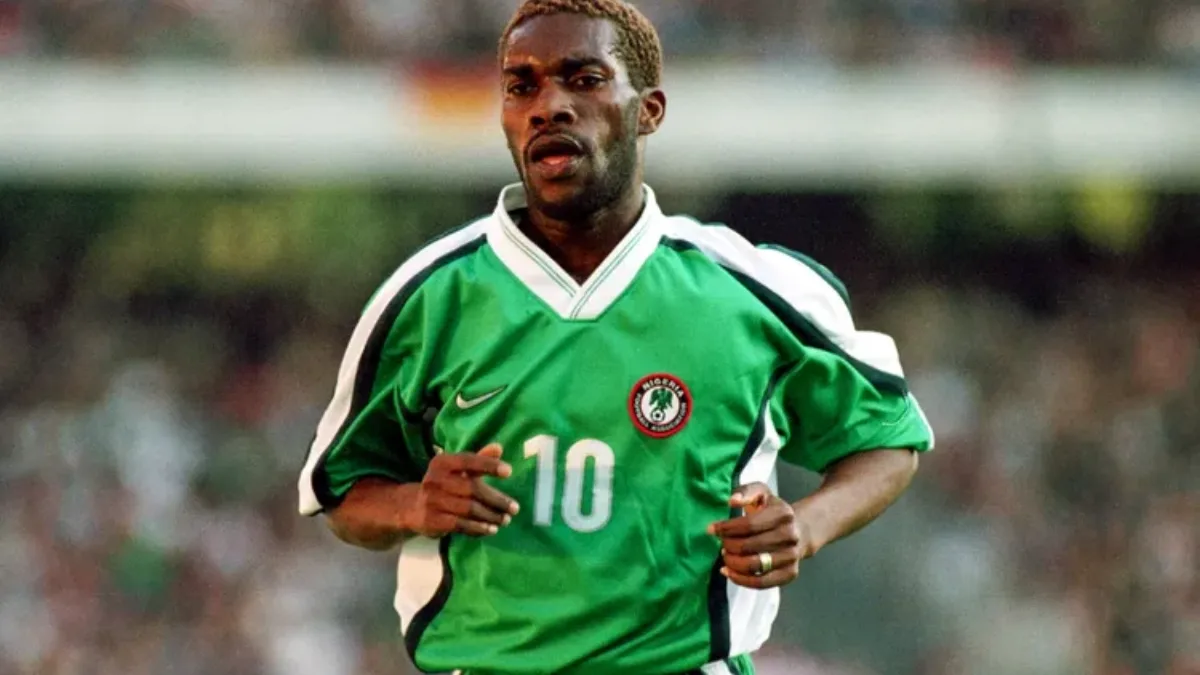
That young Nigerian was Augustine Azuka Okocha. The world came to know him as Jay-Jay. And that 11-second clip, scored against a goalkeeper called Oliver Kahn in the German Bundesliga on August 31, 1993, is still regarded by Jürgen Klopp as the greatest goal ever scored in the history of the competition.
Kahn, who would go on to become the world’s best goalkeeper three times over, had a simpler description when he revisited the moment on social media in 2016. “I’m still dizzy,” he wrote.
From Enugu to Europe on a Brother’s Invitation
Okocha was born on August 14, 1973 in Enugu, Nigeria, and learned the game on the streets the way most Nigerian children of his generation did, with improvised balls, boundless time, and no instruction manual. He arrived in Germany in 1990 on a visiting visa, taking advantage of a trials invitation his brother could not attend, and was handed a professional contract on the spot.
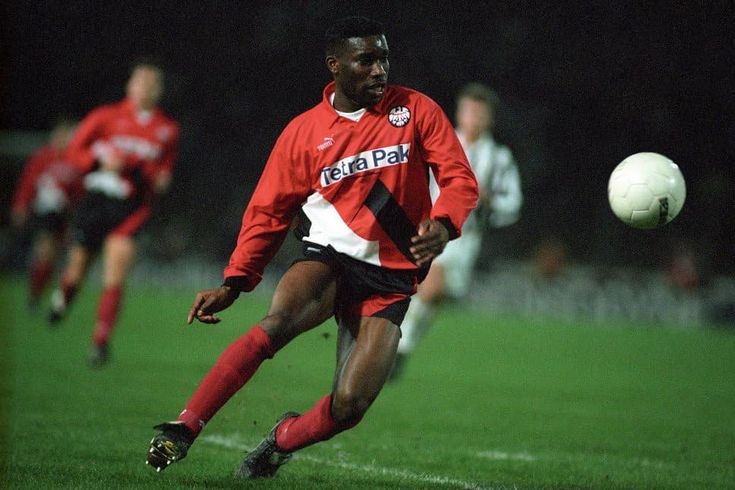
He started at Borussia Neunkirchen in the lower leagues before catching the eye of Eintracht Frankfurt. At Frankfurt, he made 90 match appearances and scored 18 goals. Most players in their early twenties are still trying to establish themselves. Okocha was already making the world’s best goalkeeper dizzy.
The Goal That Changed Everything
Being only his third goal in top-flight football, the goal against Oliver Kahn and Karlsruhe shot Okocha into the limelight. He danced around five defenders, some of them more than once, before slotting past Kahn in what Frankfurt won 3-1. The goal was voted Bundesliga Goal of the Season and Okocha later told Kicker: “That goal changed my life and made me famous.”
What makes the goal even more remarkable is that it was entirely unplanned. Okocha revealed years later: “It just took longer than I expected. It wasn’t planned, you know. It was a counter-attack and when I got the ball, I had the goalkeeper in front of me, so I pretended as if I was going to shoot to get rid of him.” One improvisation led to another, and another, until the ball was in the net and a legend was born.
Super Eagles Glory and Olympic Gold
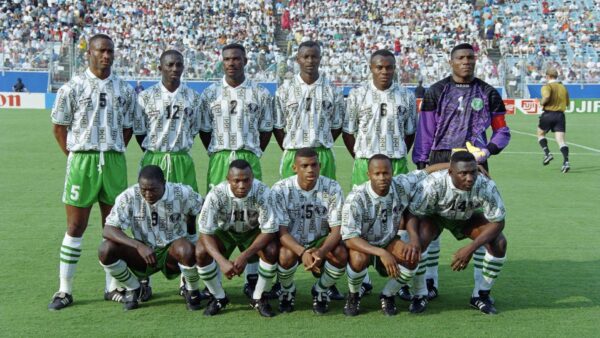
Okocha’s rise at club level ran parallel with his ascent in Nigerian football. He made his Super Eagles debut in 1993 and quickly became the team’s heartbeat. He played a pivotal role in Nigeria’s victory at the 1994 Africa Cup of Nations and was instrumental in the country’s successful campaign at the 1996 Atlanta Olympics, where Nigeria won the gold medal in football.
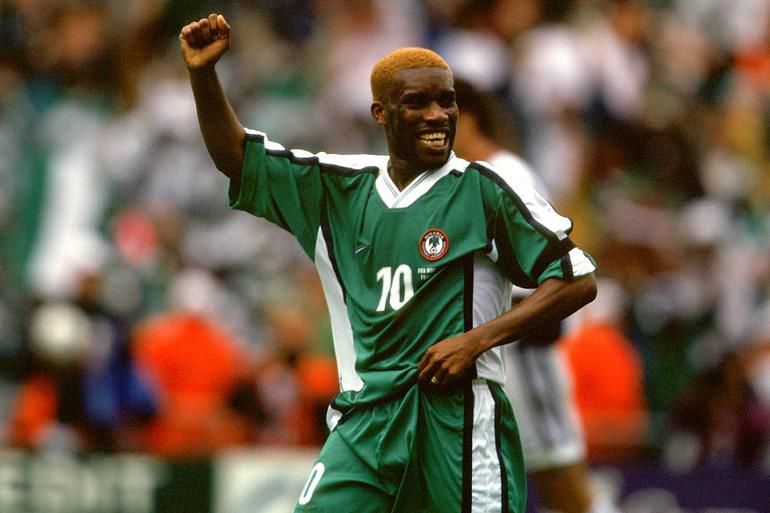
That Olympic gold remains one of African football’s most celebrated achievements. Nigeria defeated Argentina, Brazil, and eventually Argentina again in the final, and Okocha was central to everything. His ability to unlock defenses, create from nothing, and carry the weight of expectation while still looking like he was having the time of his life defined what made him special.
The Most Expensive African Footballer in the World
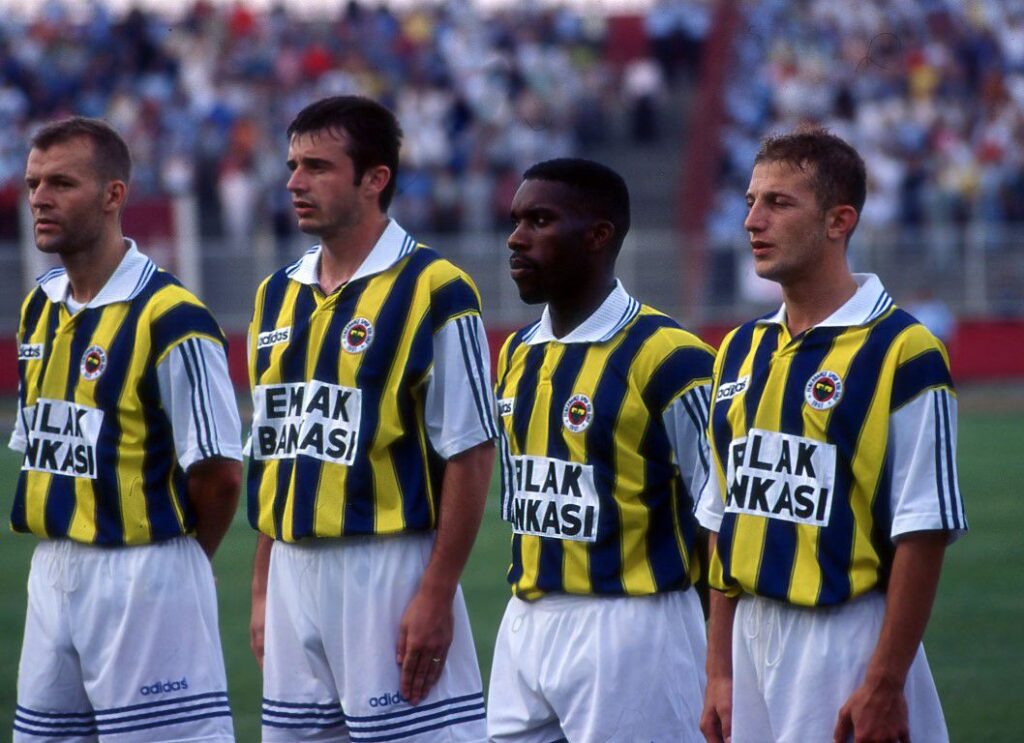
In 1998, his transfer from Fenerbahce to Paris Saint-Germain made him, at that moment, the most expensive African footballer in the history of the game. The fee was £14 million. PSG had signed many expensive players before. They had never signed anyone quite like Okocha.
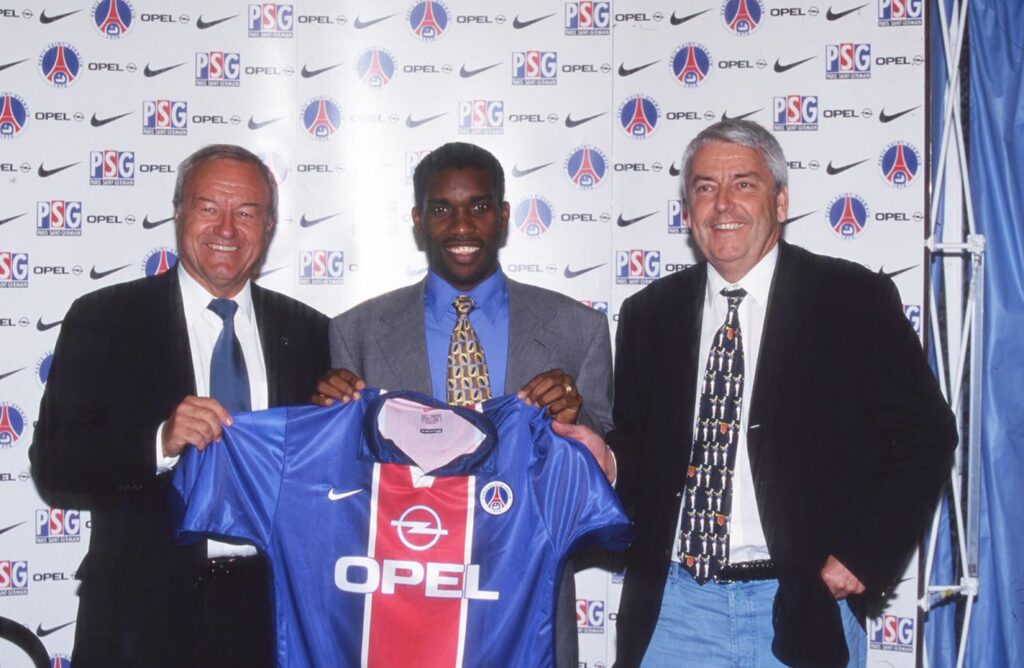
Paris gave him a grand stage and he filled it. He played 84 matches across all competitions and scored 12 goals, and during his time in Paris, he served as a mentor for a young Brazilian midfielder called Ronaldinho.
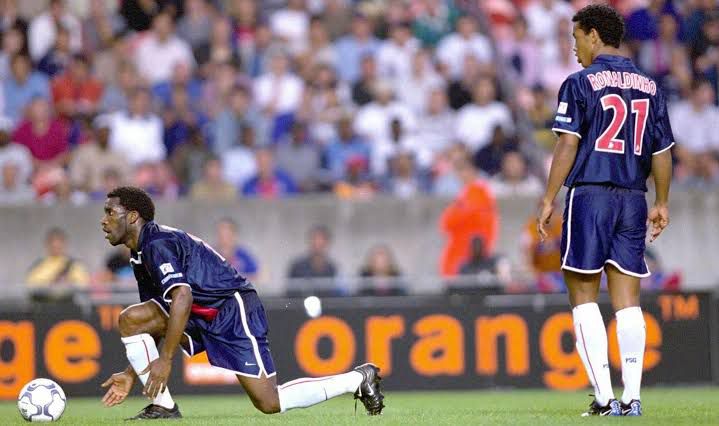
That detail matters more than any transfer fee. Ronaldinho has on multiple occasions in his own career identified Okocha as a big brother figure from his formative years in Europe. “I came to Europe at the age of 17 and I know how difficult it can be for a young player to leave his family and friends,” Okocha said.
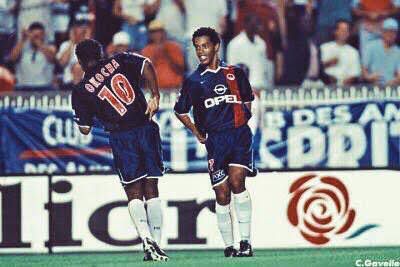
“I tried to speak with him whenever I could, to encourage him and guide him.” Two of football’s greatest entertainers, briefly sharing the same dressing room. The student went on to win the Ballon d’Or. The teacher never did, but he taught the winner.
Bolton Wanderers and a Love Story Nobody Expected
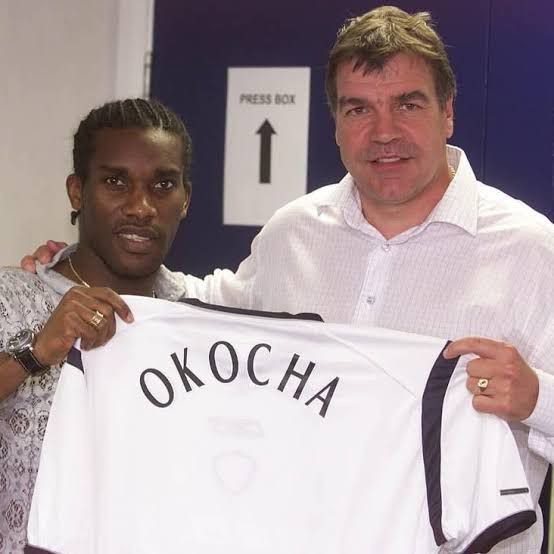
In 2002, Okocha moved to Bolton Wanderers in the English Premier League under Sam Allardyce. On paper, it made no sense. Bolton were a physical, direct team fighting to survive in the top flight. Okocha was the most technically gifted African footballer alive. It should not have worked.
But, It worked perfectly.
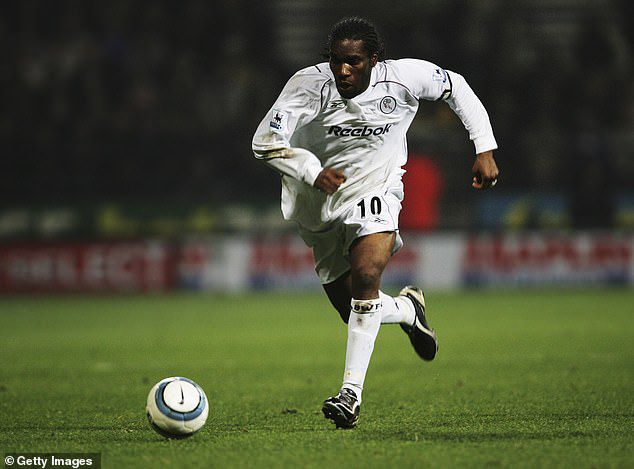
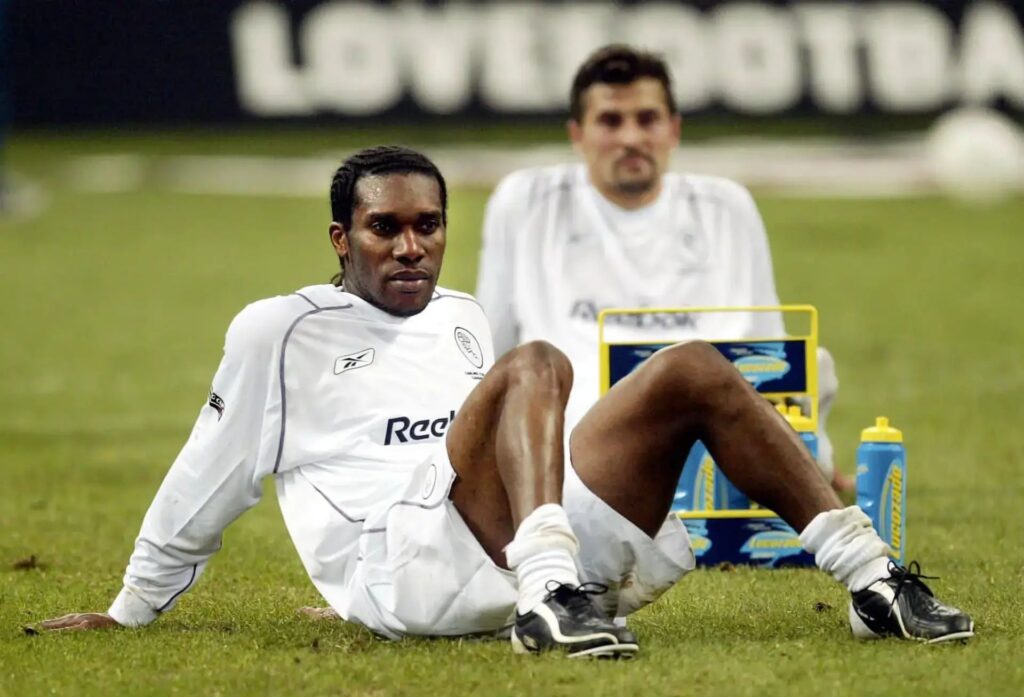
He became their captain, their talisman, and the most unlikely Premier League icon of the era. Bolton fans printed shirts with an inscription that has since passed into football folklore: “Jay-Jay: so good they named him twice.” He was voted Bolton’s greatest ever player in a 2017 fan poll.
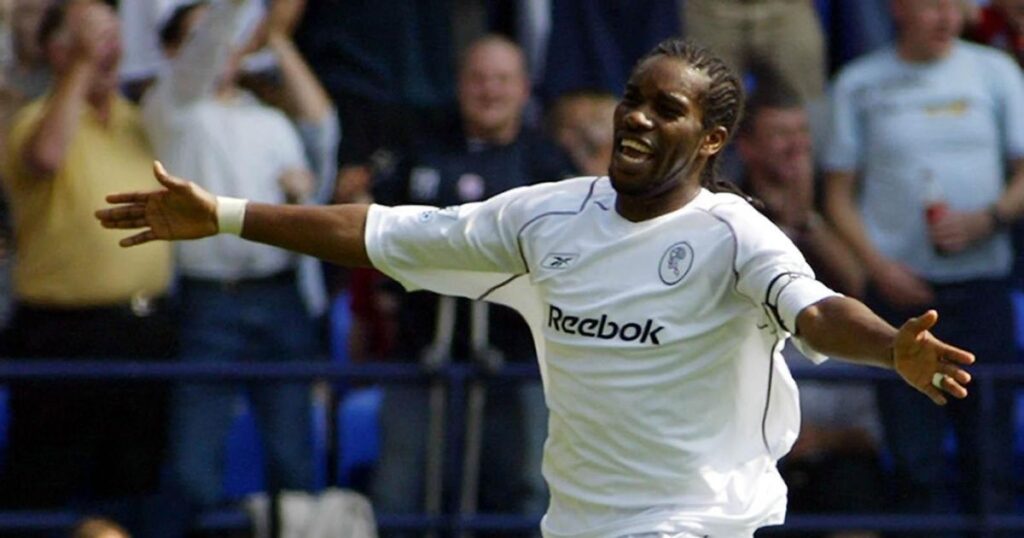
His goal against West Ham during his Bolton years was voted Goal of the Season. He helped keep the club in the Premier League. He made people fall in love with a club they had no reason to follow, simply because watching him was too entertaining to look away from.
What He Left Behind
Okocha was named in Pelé’s FIFA 100 list of the greatest living footballers. He never won the Champions League. He was never shortlisted for the Ballon d’Or. By traditional metrics of success, his trophy cabinet falls short of the very top tier.
But football does not only belong to the trophies. It belongs to the moments. And Okocha gave the world more moments per 90 minutes than almost anyone who ever played the game. A nutmeg here, a stepover there, a goal that leaves a world-class goalkeeper still dizzy three decades later.
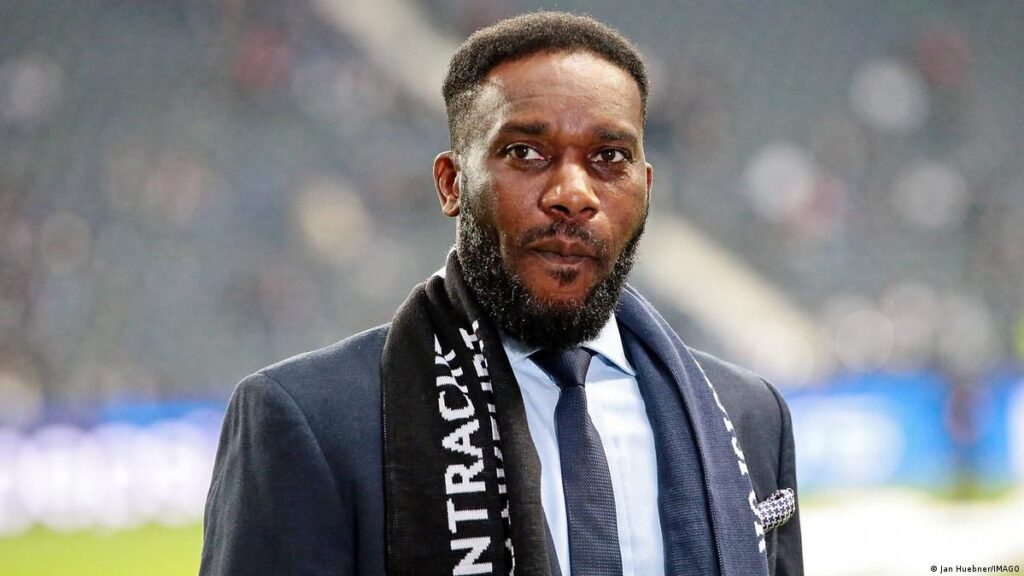
His legacy extends far beyond his achievements on the field. He played a pivotal role in changing perceptions of African footballers in Europe, demonstrating that they could be as technically gifted and tactically astute as their counterparts from any other part of the world.
Before Okocha, African players in Europe were appreciated but rarely celebrated for their technical quality. After him, the template changed. Nigeria alone has since produced Nwankwo Kanu, John Obi Mikel, Ahmed Musa, Odion Ighalo, Victor Moses, and Victor Osimhen, each finding their way into Europe’s top leagues partly because Okocha kicked the door open.
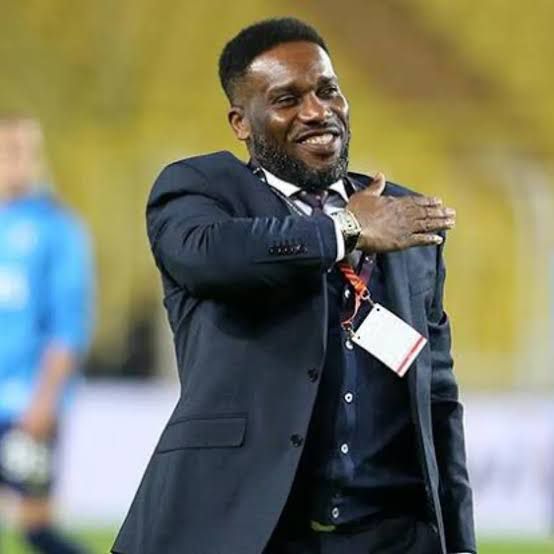
He was born in Enugu, learned his craft on Nigerian streets, and went on to make Oliver Kahn dizzy, mentor Ronaldinho, and become the greatest player Bolton Wanderers has ever seen. There will never be another one quite like him. That is not sentiment. That is simply the truth.