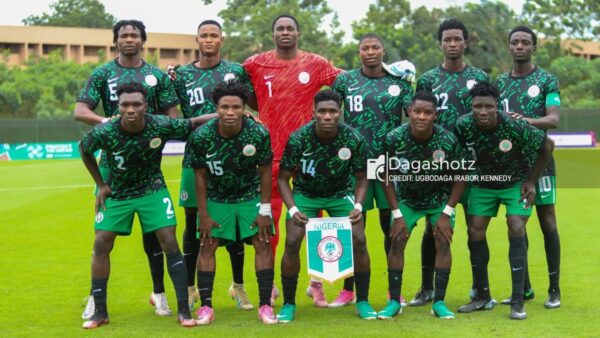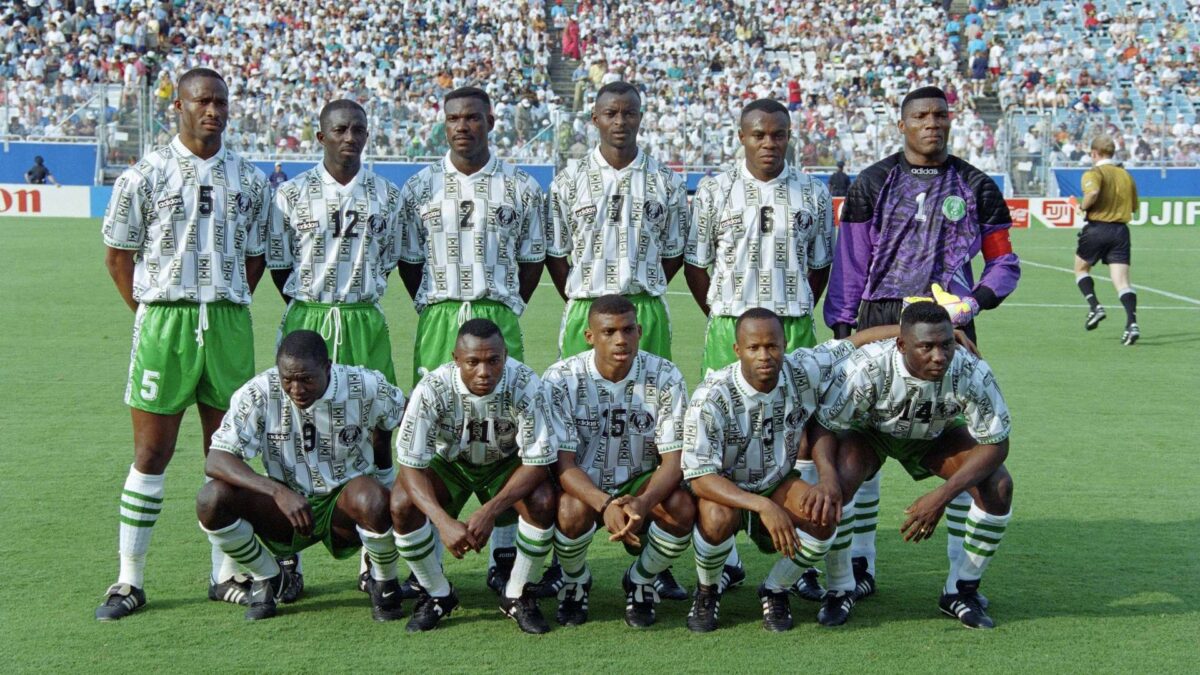
There are moments in sport that live forever not because of what happened, but because of what almost happened. For Nigerian football, no moment fits that description better than the afternoon of July 5, 1994, at Foxboro Stadium in Boston, Massachusetts, when the Super Eagles stood 88 minutes away from a World Cup quarterfinal and had the world at their feet.
Thirty years later, that afternoon still haunts. It still sparks arguments in barbershops, living rooms, and Twitter threads. And it still represents the highest and most heartbreaking point Nigeria has ever reached at a World Cup.
A Squad That Was Simply Different
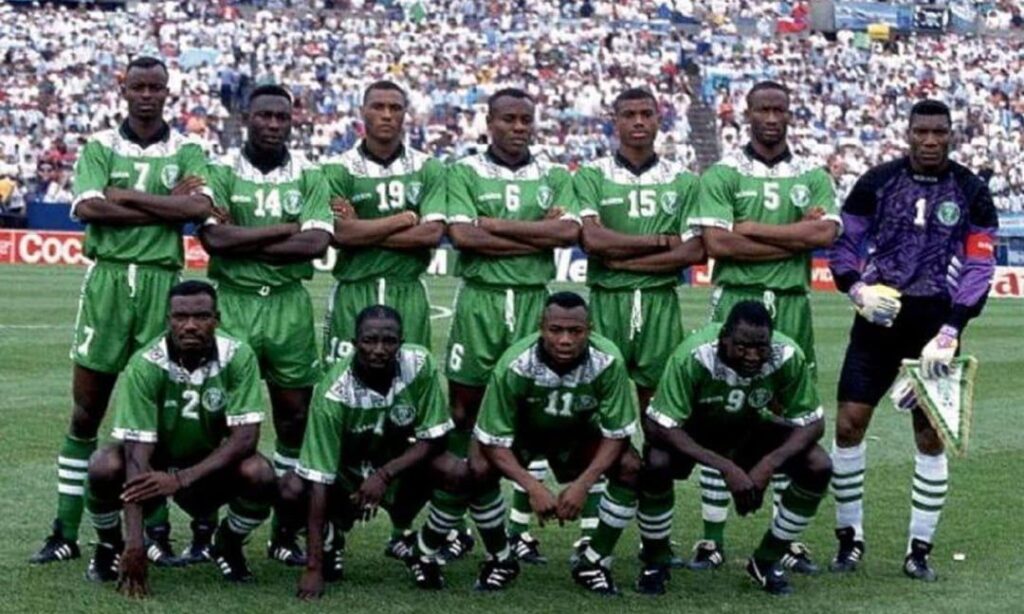
To understand what happened in Boston, you first have to understand what the 1994 Super Eagles actually were. This was not just a good Nigerian team. This was arguably the most talented group of footballers the African continent had ever assembled in one squad at one time.
Managed by Dutch coach Clemens Westerhof, the squad featured Stephen Keshi, Sunday Oliseh, Jay-Jay Okocha, Rashidi Yekini, Finidi George, Emmanuel Amunike, Daniel Amokachi, Peter Rufai, and a host of others. Nearly every player in that squad was playing top-level European club football. They were not underdogs in terms of quality. They were simply unknown in terms of reputation.
Earlier that same year, Nigeria had already announced themselves on the continent. They won the 1994 Africa Cup of Nations in Tunisia, arriving as strong contenders and delivering on every expectation. By the time the World Cup came around in June, this was a team that knew exactly how good it was.
Group Stage Dominance
Placed in Group D alongside Argentina, Bulgaria, and Greece, pundits predicted an early exit for the debutants. What they got instead was a masterclass.
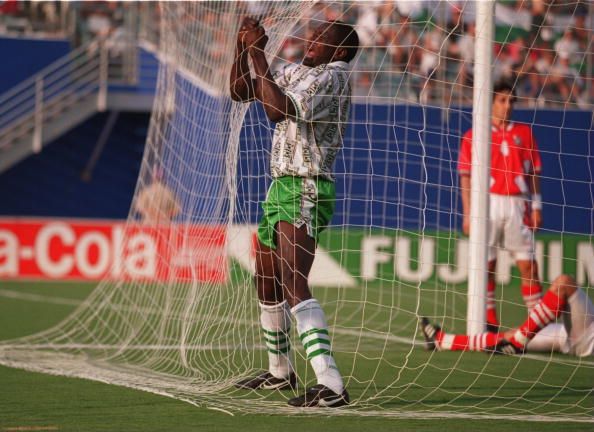
Nigeria opened their World Cup account on June 21, 1994, against Bulgaria at the Cotton Bowl Stadium in Dallas. In the 21st minute, Rashidi Yekini, assisted by Finidi George, scored Nigeria’s first ever World Cup goal. In a moment the world has never forgotten, he grabbed the back of the net and screamed with raw, unbridled joy. It was not just a goal. It was a declaration. Nigeria were here, and they meant business.
Daniel Amokachi added a second in the 43rd minute, a goal later shortlisted for the FIFA World Cup Greatest Goal Award in 2018. Nigeria won 3-0 and sent shockwaves through the tournament.
They lost their second match to Argentina, though even that defeat came after taking an early lead against one of the tournament favorites. A 2-0 victory over Greece followed, and Nigeria topped Group D on goal difference, finishing above Argentina. Nigeria were ranked fifth in the world by FIFA at the time, the highest ever by any African football team, and were adjudged the most entertaining team of the tournament.
The Game That Broke a Nation
The Round of 16 brought Italy. A wounded, struggling Italian side who had barely scraped through the group stage, losing their opener to Ireland and needing Baggio’s individual brilliance to survive. Nigeria had every reason to be confident.
On a stiflingly hot day in Boston, an uncharacteristic Paolo Maldini error saw the ball drop for Emmanuel Amunike inside the Italian penalty area, who lifted it over goalkeeper Luca Marchegiani in the 25th minute. Nigeria led. Italy chased. The clock ticked.
For 63 more minutes, the Super Eagles defended their lead. Italy probed, pushed, and grew increasingly desperate. Their frustration boiled over when Gianfranco Zola was sent off for a stomp on Augustine Eguavoen with 15 minutes remaining, leaving Italy with 10 men. A quarterfinal spot had never felt closer.
Then, in the 88th minute, Roberto Baggio happened.
Roberto Mussi burst into the area and picked out Baggio 10 yards out. He swept the ball home into the net to send the game into extra time. Two minutes. That was all it took to unravel 88 minutes of disciplined, determined Nigerian defending.
In extra time, Baggio chipped a ball through to Antonio Benarrivo, who was bundled down by Eguavoen, prompting the referee to point to the spot. Baggio stepped up. He converted. Italy won 2-1 and went on to reach the final, where they lost to Brazil on penalties.
Nigeria were out. The Super Eagles had been eliminated not by a superior team but by a single moment of individual genius from the greatest player in the world at the time.
What That Team Left Behind
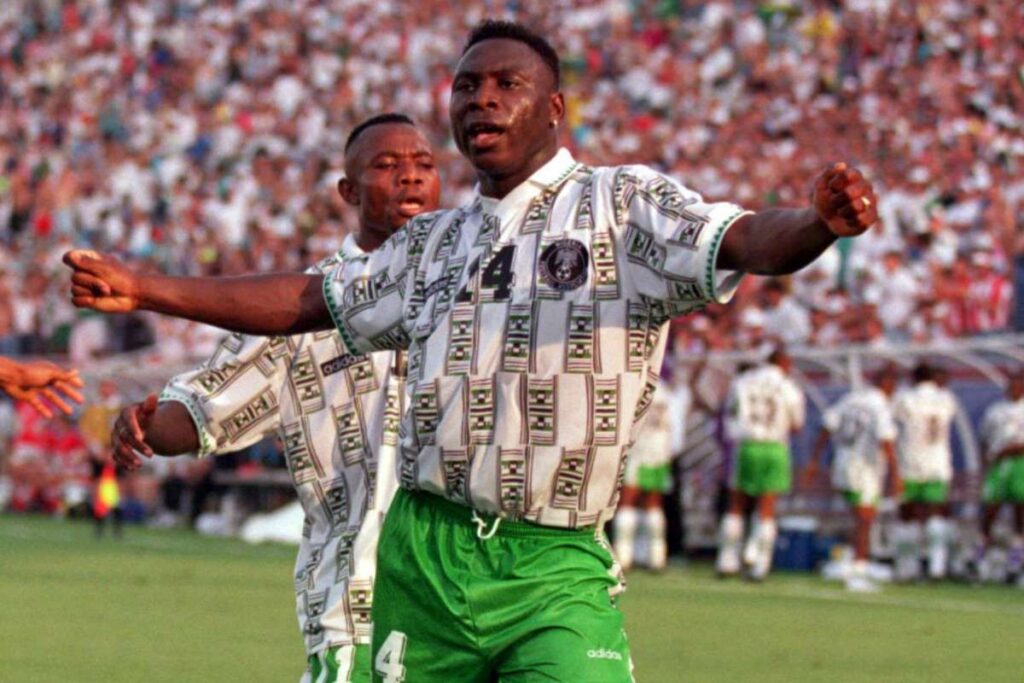
The 1994 Super Eagles were not merely a piece of football nostalgia. They were one of the most significant moments in African football history, a group of exceptional players who arrived on the world stage simultaneously, at the same peak, and delivered in the two biggest competitions on the continent’s calendar within the space of a single year.
They redefined what the world expected from African football. Before 1994, African teams were considered entertaining but limited. The Super Eagles of 1994 proved that African football could compete with anyone, beat anyone, and on the right day, frighten everyone.
Sunday Oliseh, who played in that tournament, later reflected: “We became more than a football team. We became a strong family.”
Nigeria went on to reach the Round of 16 at the 1998 and 2014 World Cups, equaling but never surpassing their debut achievement. Three more World Cup appearances have followed, but none have produced the same quality, the same excitement, or the same heartbreak.
The Standard That Has Never Been Matched
Football legend Segun Odegbami has said that the 1994 squad was the best Nigeria has ever produced, describing the players as exceptional individuals who also understood how to play as a team with unrivaled tactics and physical strength.
He may be right. Nigeria has not been ranked fifth in the world since. They have not topped a World Cup group containing Argentina since. They have not produced a collection of players that simultaneously peaked together at that level since.
The 1994 Super Eagles set a standard that 30 years of Nigerian football have chased and never quite caught. That is both their greatest legacy and their most lasting gift to the nation.
Roberto Baggio eventually missed his most famous penalty in the World Cup final. But for Nigerian fans, the penalty he scored in Boston remains the one that truly broke their hearts.