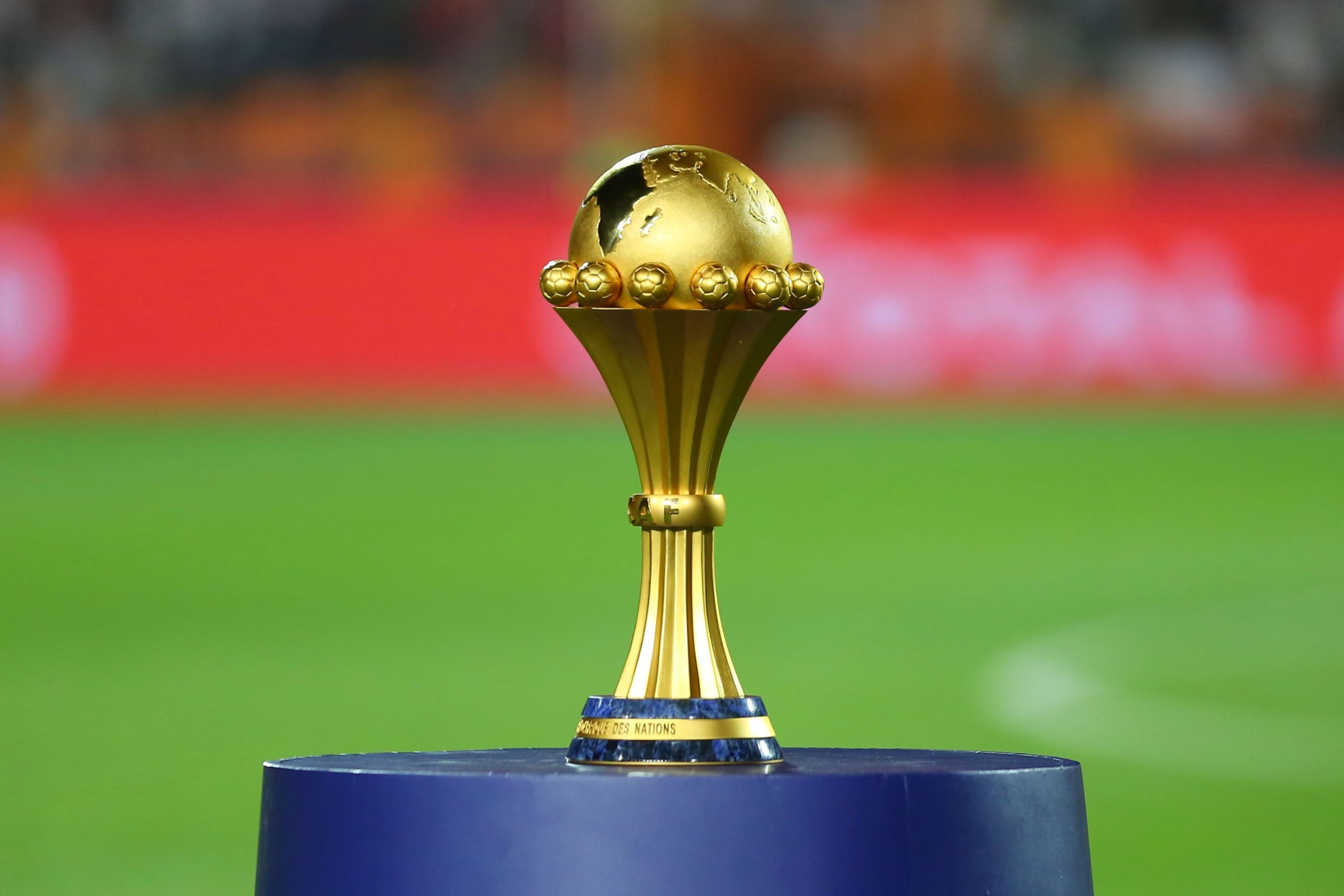
The Africa Cup of Nations will be held every four years from 2028, the Confederation of African Football announced on Saturday, marking the end of the tournament’s 57-year biennial format and ushering in a new era for African football.
CAF President Patrice Motsepe made the historic announcement in Rabat, Morocco, just hours before the 2025 AFCON kicks off on Sunday. The decision brings Africa’s premier tournament in line with major global competitions like the FIFA World Cup and UEFA European Championship, both of which follow quadrennial cycles.
The New Structure
The 2027 edition jointly hosted by Kenya, Uganda, and Tanzania will proceed as planned under the current two-year cycle. A one-off tournament will then be held in 2028 before AFCON settles into its new four-year format, with subsequent editions scheduled for 2032, 2036, and beyond.
“We have the most exciting new structure for African football,” Motsepe told reporters at the press conference. “I do what is in the interests of Africa. The global calendar has to be significantly more synchronized and harmonised.”
To bridge the gap created by the extended cycle, CAF will launch an annual African Nations League beginning in 2029. The new competition will involve all 54 CAF member nations divided into four geographical zones.
Matches will be played during the September and October international windows, with regional winners meeting in November for a final showdown. The format mirrors UEFA’s Nations League, which has successfully provided meaningful competitive fixtures during FIFA windows.
Why the Change?
The decision addresses longstanding tensions between CAF and European clubs over player availability. AFCON’s biennial schedule, particularly when held in January and February, has consistently disrupted domestic leagues and created friction with clubs reluctant to release their African stars mid-season.
“Every year in Africa, the best African players who play in Europe and worldwide will be with us on the continent,” Motsepe explained. “We are going to have a world-class competition every year involving 54 African nations with all the best players.”
The CAF president emphasized that financial sustainability drove the restructuring. Historically, AFCON generated approximately 80 percent of CAF’s revenue, leaving the confederation vulnerable when tournaments were postponed or faced commercial challenges.
“Historically, the AFCON was the prime focus where we could get resources to fund African football,” Motsepe said. “In terms of this new dispensation, we will be getting resources every year.”
The African Nations League provides CAF with annual revenue streams through broadcasting rights, sponsorships, and commercial partnerships, reducing dependence on a single tournament held every two years.
Increased Prize Money
Alongside the structural changes, CAF announced a 43 percent increase in prize money for the AFCON winner. The champions will now receive $10 million, up from the previous $7 million. The boost reflects CAF’s efforts to enhance the tournament’s prestige and commercial appeal.
The prize money increase comes as Morocco prepares to host the 2025 edition, which features 24 nations competing across multiple cities. Hosts Morocco face Comoros in Sunday’s opening match in Rabat.
Implications for Nigeria
For Nigeria and other African footballing nations, the shift presents both opportunities and challenges. The four-year cycle reduces fixture congestion for players based in Europe, potentially easing club-country tensions that have plagued African football for decades.
Super Eagles stars like Victor Osimhen, who suffered a hamstring injury during Nigeria’s World Cup playoff final against DR Congo, could benefit from the reduced frequency. Players will have more recovery time amid packed European club seasons, potentially arriving fresher for major tournaments.
However, the extended cycle also means Nigeria must wait four years between AFCON opportunities. Missing qualification would lock the Super Eagles out of continental competition for a longer period, raising the stakes for every qualifying campaign.
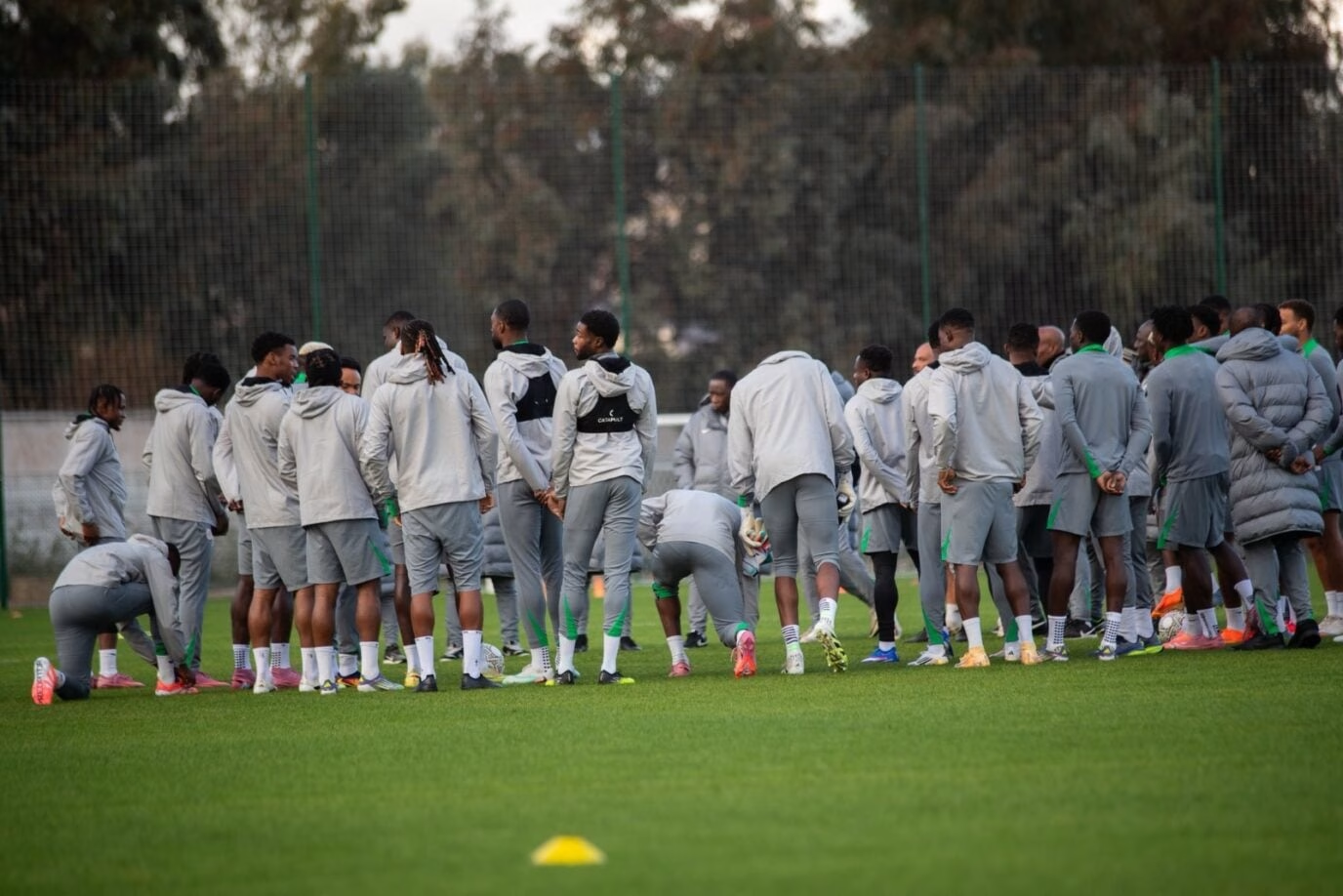
The African Nations League provides Nigeria with annual competitive fixtures to maintain sharpness and cohesion. The competition offers meaningful matches rather than friendlies, allowing Eric Chelle or future coaches to build team chemistry and test players in high-pressure environments.
Reactions and Concerns
The announcement has sparked debate across African football. Supporters argue the changes align African football with global standards and provide financial stability. Critics worry AFCON’s unique identity and cultural significance could diminish with less frequent editions.
“AFCON every two years was the only time the world truly looked at us,” one fan commented on social media. “Now, we are just another date on FIFA’s calendar. The Nations League is just AFCON Lite.”
Coaches have expressed mixed feelings about the transition. Angola’s manager Patrice Beaumelle criticized the rushed preparation for the 2025 edition, with FIFA pushing the player release date to December 15, just six days before kickoff.
“Releasing a player on the 15th for an AFCON that kicks off on the 21st is unacceptable,” Beaumelle said, highlighting ongoing calendar coordination challenges despite the restructuring.
Ghana’s struggles to qualify for consecutive AFCON tournaments add urgency to the debate. Head coach Otto Addo acknowledged the increased pressure: “I know for a lot of people, the World Cup is bigger than AFCON, but for us, the AFCON is bigger. The margin for error has disappeared.”
FIFA Involvement
Motsepe revealed the decision was made in consultation with FIFA President Gianni Infantino and Secretary-General Mattias Grafström. FIFA has long advocated for better calendar coordination between confederations, and the AFCON restructuring represents a major step toward achieving that goal.
Grafström, who attended Saturday’s press conference, called it a “historic decision” and pledged FIFA’s support for implementing the changes.
“I want to stay in touch to coordinate as much as possible the dates, like we did for this edition as well,” Grafström said. “It took a bit of time, but in the end, the compromise was found, which was accepted by everyone.”
The 2029 African Nations League launch conveniently avoids clashing with FIFA’s revamped Club World Cup, demonstrating the improved coordination between global and continental football governance.
What This Means for African Football
The transformation represents CAF’s most ambitious gamble in decades. By shifting to a four-year cycle, the confederation bets that a rarer AFCON will command higher broadcast rights, greater global prestige, and improved tournament quality.
Success hinges entirely on the African Nations League’s execution. If the new competition attracts top players, secures quality broadcasting deals, and captures fan imagination, it could elevate African football’s global standing while providing sustainable revenue streams.
However, if the Nations League fails to resonate with fans or struggles commercially, CAF risks losing both the financial security AFCON provided and the cultural momentum built through biennial tournaments.
The stakes are particularly high for smaller African nations that relied on frequent AFCON qualifiers to maintain visibility and funding. The four-year cycle means fewer qualification opportunities and potentially longer periods of international obscurity for nations that fail to qualify.
Looking Ahead
As Morocco prepares to kick off the 2025 AFCON on Sunday, African football stands at a crossroads. The tournament that has defined continental football for nearly seven decades is evolving, embracing a new structure designed for modern football’s globalized landscape.
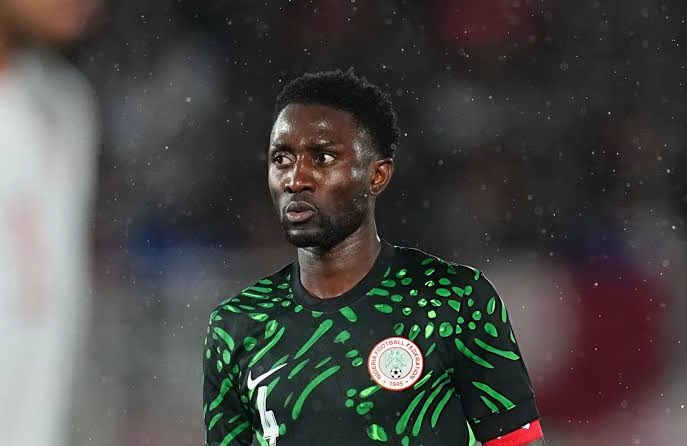
For Nigeria, the changes arrive at a pivotal moment. Having missed the 2026 World Cup and with William Troost-Ekong retiring from international duty, the Super Eagles face rebuilding under Eric Chelle. The African Nations League will provide regular competitive action to develop the next generation of Nigerian stars.
The 2027 AFCON in East Africa represents the final edition under the current format before the four-year cycle begins. After that, every AFCON becomes a once-in-four-years celebration, potentially elevating the tournament’s prestige while testing whether African football can maintain momentum during the gaps.
Whether this transformation proves visionary or misguided remains to be seen. What’s certain is that African football will never be quite the same again.